Blog

Global insights on sintered plastic, sintered metal and sediment filter cartridges, covering material selection, application engineering, performance, maintenance, sourcing and compliance for industrial filtration systems.

Perforated Plate Sintered Mesh vs Five-Layer Sintered Mesh: Key Differences

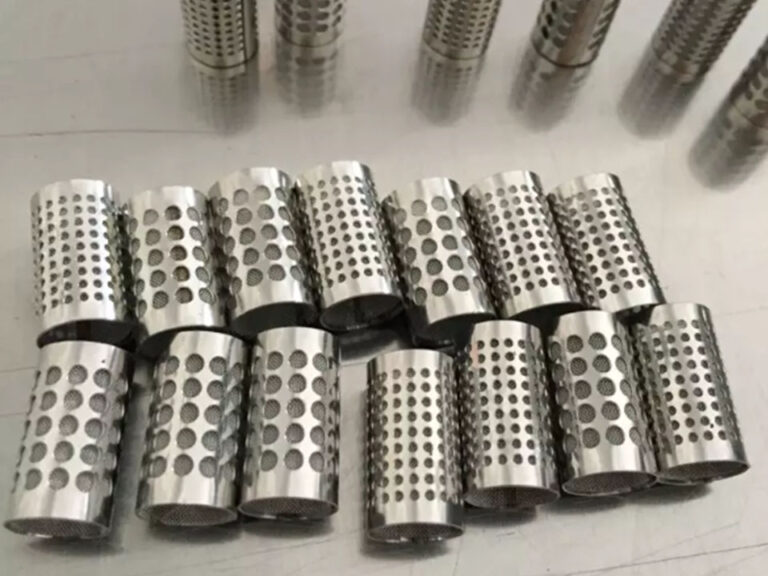
Close-up of a perforated metal support tube for composite mesh filter cartridges, showing a polished cylindrical surface and uniformly spaced round holes.

Five-layer sintered mesh and perforated plate sintered mesh are often treated as rival products, but they solve different problems. This article explains how each is built, what the perforated plate changes in strength, flow area, and backwash behavior, and where each design makes sense. It closes with the specification details buyers should send before requesting a quotation.

Read MorePerforated Plate Sintered Mesh vs Five-Layer Sintered Mesh: Key Differences

What Is a Perforated Plate Sintered Mesh Filter Cartridge?

Perforated plate composite mesh cartridges arranged in rows, featuring cylindrical metal bodies with different perforation patterns and mesh-lined interiors.

A perforated plate sintered mesh filter cartridge pairs multilayer sintered wire mesh with a perforated metal support. The support helps the filter keep its shape under pressure, flow surges, and backwash cycles. This guide covers the construction, how it differs from other sintered metal media, where it fits, and which operating details engineers and buyers should define before requesting a quote.

Read MoreWhat Is a Perforated Plate Sintered Mesh Filter Cartridge?

Pleated vs Non-Pleated Sintered Metal Filters: Which Should You Choose?

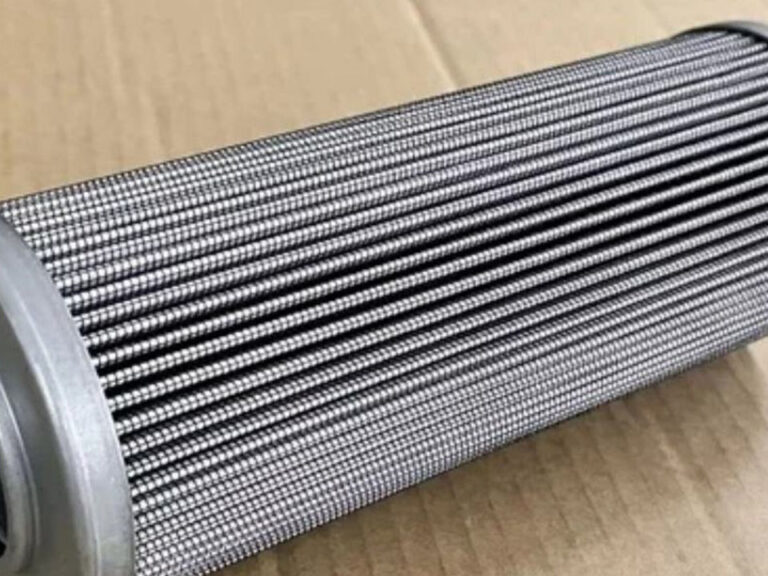
Detailed view of a sintered pleated filter showing tightly spaced stainless steel wire mesh pleats and a reinforced metal end cap.

Pleated sintered metal cartridges add filtration area inside a fixed housing. Non-pleated cartridges offer a rigid, simple structure. This guide explains how each design affects face velocity, pressure drop, dirt holding, cleaning, and mechanical strength. It also covers selection by operating condition, common specification mistakes, and the process data to prepare before requesting a quotation.

Read MorePleated vs Non-Pleated Sintered Metal Filters: Which Should You Choose?

What Is a Sintered Pleated Filter and How Does It Work?

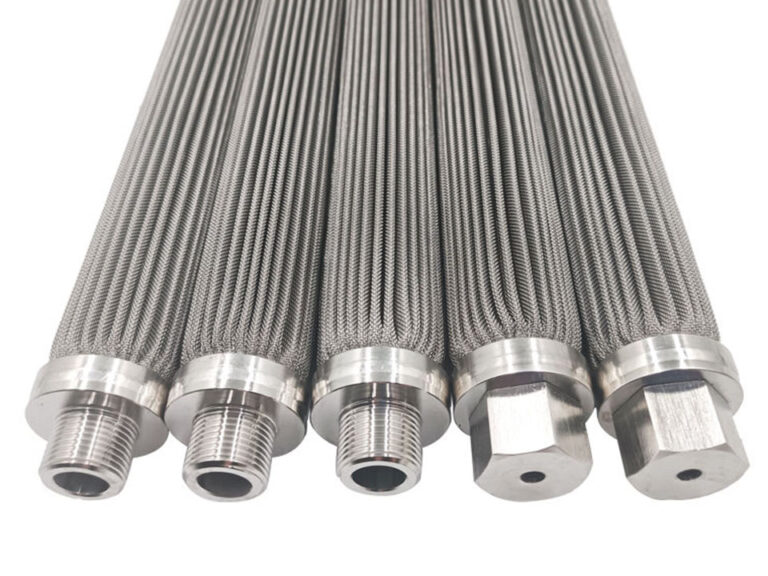
Close-up of five sintered pleated filters featuring fine metal mesh pleats and stainless steel threaded and hexagonal end fittings.

This article explains what a sintered pleated filter is, how pleated metal mesh or fiber media captures solids, and why pleating changes pressure drop and cleaning behavior. It also covers cleaning methods, material and rating considerations, common specification mistakes, and the operating data buyers should prepare before requesting a quotation for an industrial application.

Read MoreWhat Is a Sintered Pleated Filter and How Does It Work?

Why Are Sintered Metal Fiber Felt Filters Used in Polymer Melt Filtration?

Small cylindrical sintered felt filters featuring fine metal mesh exteriors, reinforced circular rims, and mounting tabs.

Polymer melts carry hard particles and deformable gels, and a filter medium has to handle both at high temperature without shedding fibers or collapsing under pressure. This article explains how sintered metal fiber felt works in melt filtration, how it compares with woven screens and pleated candle designs, and which operating details buyers should define before requesting a quotation.

Read MoreWhy Are Sintered Metal Fiber Felt Filters Used in Polymer Melt Filtration?

What Is a Sintered Metal Fiber Felt Filter and How Does It Work?

Sintered felt filters in overlapping flat metal fiber sheets, featuring dense nonwoven fiber structures and textured surfaces.

A sintered metal fiber felt filter traps particles inside a bonded three-dimensional network of fine metal fibers instead of stopping them at a single surface. This article explains how that structure affects dirt-holding capacity, pressure drop, and cleanability. It compares felt with mesh, powder, and pleated media, and lists the operating details buyers should define before requesting a quotation.

Read MoreWhat Is a Sintered Metal Fiber Felt Filter and How Does It Work?

Sintered Mesh vs Woven Wire Mesh: Which Is Better for Industrial Filtration?

Close-up of three sintered mesh filter cartridges showing fine mesh structures and different stainless steel end connections.

Sintered mesh and woven wire mesh both use metal wire, but they behave very differently under pressure, flow, and cleaning. This guide explains how bonding, layering, and weave style affect pore stability, pressure drop, backwashing, and mechanical strength. It also shows when each option makes sense and which operating details buyers should define before requesting a quotation.

Read MoreSintered Mesh vs Woven Wire Mesh: Which Is Better for Industrial Filtration?

What Is a Five-Layer Sintered Mesh Filter and How Does It Work?

Close-up of a small cylindrical sintered mesh filter held between fingers, showing its fine woven metal mesh structure.

A five-layer sintered mesh filter bonds several woven wire layers into one rigid porous sheet, with each layer assigned a job: protection, particle retention, flow distribution, or structural support. This guide explains how the layers work together, how they compare with other sintered media, and which specification points buyers should confirm before ordering.

Read MoreWhat Is a Five-Layer Sintered Mesh Filter and How Does It Work?

How to Clean and Reuse Sintered Metal Filter

Sintered metal filters featuring hollow cylindrical tubes and porous metal structures with different pore textures.

Sintered metal filters can often be cleaned and returned to service, but only when the cleaning method suits the contaminant, the filter construction, and the process fluid. This guide covers backwashing, ultrasonic cleaning, chemical soaks, and thermal burnout. It also explains how to verify recovery with pressure drop, bubble point, and weight checks, and when replacement costs less than another cleaning cycle.

Read MoreHow to Clean and Reuse Sintered Metal Filter

Sintered Metal Filters vs Stainless Steel Mesh Filters: What’s the Difference?

Sintered metal filters with smooth porous cylindrical bodies and stainless steel threaded connectors.

Sintered metal filters and stainless steel mesh filters both use metal media, but they retain particles in different ways. This article explains how pore structure, micron rating methods, pressure drop, cleaning behavior, and mechanical stability differ. It also lists the process details to prepare before requesting a quotation, so engineers and buyers can match the media to the duty instead of the label.

Read MoreSintered Metal Filters vs Stainless Steel Mesh Filters: What’s the Difference?

How to Choose Sintered Plastic Fluidization Plates for Bulk Powder Handling

Six white cylindrical Material Processing Filters arranged side by side, displaying flat porous ends and threaded fittings for industrial filtration.

This guide explains how engineers and buyers can specify porous plastic fluidization plates for silos, hoppers and powder conveying equipment. It covers powder characterization, permeability versus pore size, distributor pressure drop, PE, PP and PTFE tradeoffs, support and sealing details, air quality, maintenance, and the information needed for an accurate RFQ.

Read MoreHow to Choose Sintered Plastic Fluidization Plates for Bulk Powder Handling

How Do Porous Plastic Filters Work in Powder Fluidization and Material Processing?

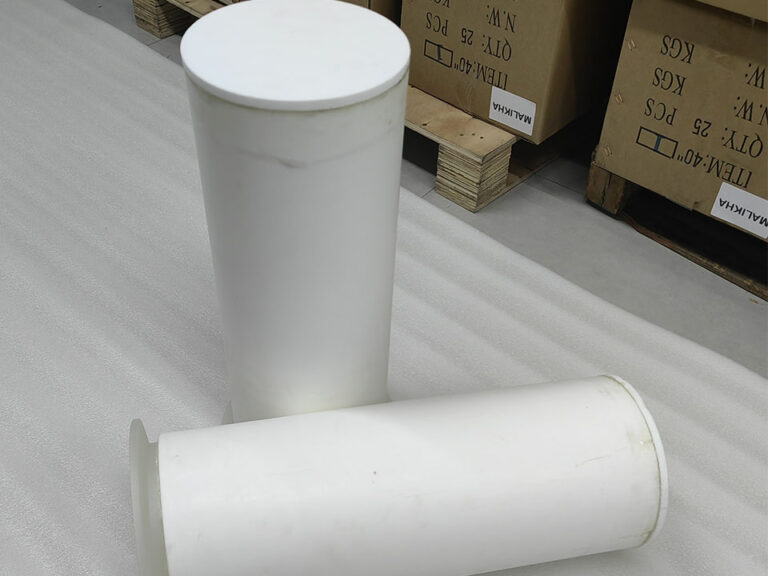
Two large white cylindrical Material Processing Filters with smooth surfaces and flanged ends, displayed upright and horizontally.

Porous plastic does two jobs in powder handling: it spreads compressed gas evenly through a bed or hopper, and it keeps the powder from migrating back into the air supply. This article explains how that works, where pore size, plate thickness, air quality, and static control matter, and which questions to settle before you request a quote for a custom porous plastic element.

Read MoreHow Do Porous Plastic Filters Work in Powder Fluidization and Material Processing?