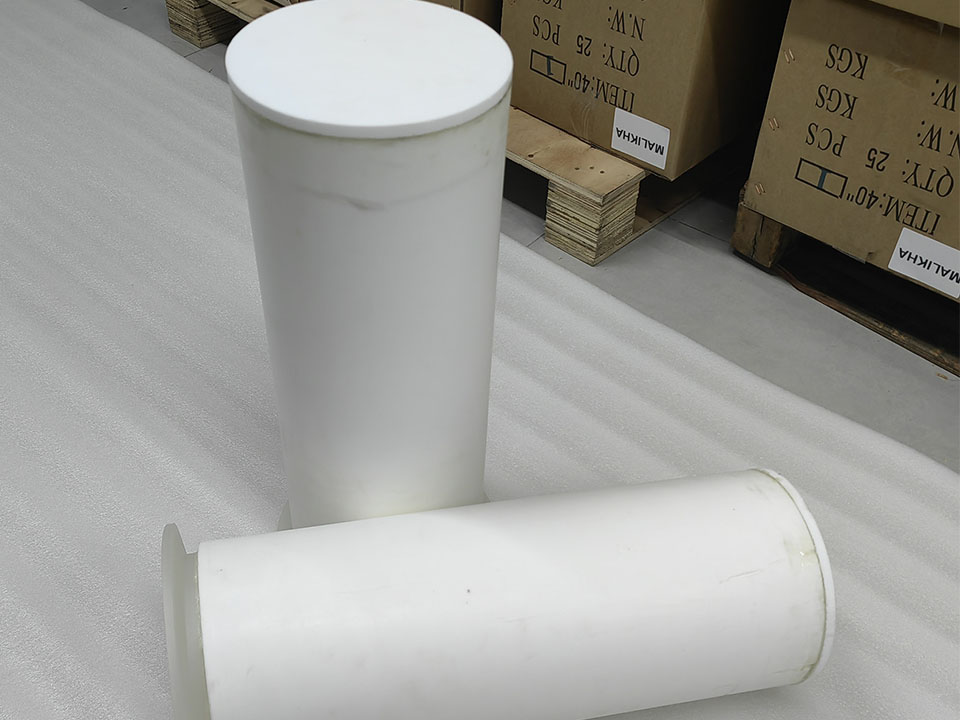
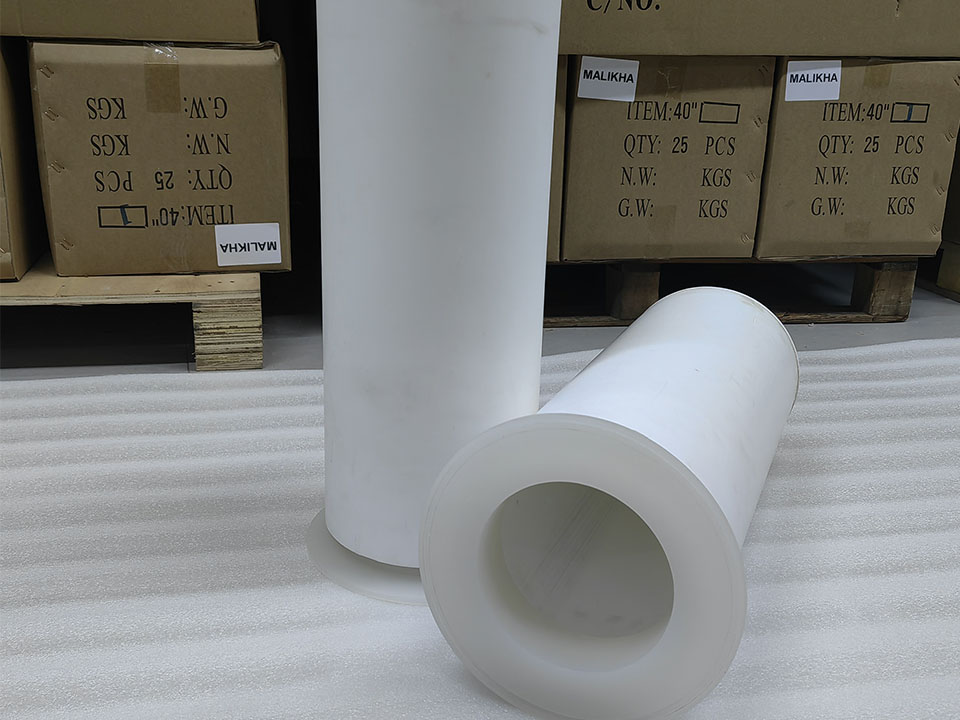
Before you leave, we invite you to talk directly with our managing team to ensure you receive the most accurate technical guidance, pricing support, and customization options for your project. Our experts can quickly evaluate your requirements, recommend suitable sintered plastic filter solutions, and help you reduce sourcing risks while improving efficiency, consistency, and long-term supply stability for your industrial applications.
Need Help Selecting the Right Filter Cartridge?
Our Sales Team
Tell our sales support team your product type, micron rating, size, application, filtered medium, working temperature, pressure, and estimated quantity. We will help you match the right sintered plastic, sintered metal, or sediment filter cartridge.
How Do Porous Plastic Filters Work in Powder Fluidization and Material Processing?
Porous plastic filters work in powder fluidization by acting as a gas distributor. Compressed air passes through thousands of small, interconnected pores and spreads evenly across the whole surface. Once the upward gas velocity is high enough, the drag on the particles offsets their weight. The powder loosens and begins to flow like a liquid. The pores are fine enough to keep the powder from falling back into the air chamber, and the plate’s flow resistance helps spread the air evenly instead of letting it escape through a few easy paths.
That sounds simple, but the performance of a fluidized bed, an aerated hopper, or a blending vessel depends heavily on the porous element’s permeability, thickness, pore structure, mechanical support, and the quality of the air supplied to it. This article explains the mechanism and where it is used in material processing. It also covers what to specify before you request a custom element.
How Porous Plastic Creates a Fluidized Powder Bed
Porvair Filtration describes fluidisation as introducing compressed gas through porous media into a bulk powder so the powder behaves like a liquid and is easier to move. Fluidization is therefore a gas-distribution problem as much as a filtration problem. The porous element has two jobs.
Distributing Gas Evenly
A sintered plastic element has a continuous network of interconnected voids. Gas entering the back face has to pass through many parallel micro-paths before it reaches the powder. Each path adds resistance. If the permeability is uniform across the plate, the pressure drop across the element is also uniform, so every square inch delivers a similar share of the air.
That uniformity is the main reason porous media outperform a drilled plate or a coarse screen. With a few large openings, air jets through the easiest paths. The result is channeling, bubbling, and dead zones where powder stays packed. Published work on distributor design, such as a study of distributor pressure drop in fluidized beds, treats the pressure drop across the distributor as a design variable that affects fluidization quality. A distributor that is too permissive can leave the bed poorly distributed. One that is too restrictive wastes blower or compressor energy.
Keeping Powder Out of the Air Chamber
The pores must also act as a barrier. When airflow stops, powder should rest on the surface, not sift into the plenum below. The pore size therefore has to be chosen relative to the powder’s particle-size distribution. A supplier’s nominal pore rating describes the medium. It does not guarantee that no fine particle will ever enter a pore. The finest fraction of the powder, not the average particle size, usually decides whether the surface blinds or the plenum fills with dust over time.
Cohesive fine powders add another difficulty. Porvair notes that smaller particles generally become more cohesive and harder to move. Very fine, cohesive powders often need a different strategy than a flat plate alone, such as a lower, more uniform airflow, a finer distributor, or mechanical assistance. Do not treat a porous element as a guaranteed fix for a difficult powder.
Where Porous Plastic Is Used in Material Processing
Typical uses include:
Silo and hopper discharge. Aeration pads, cones, or strips loosen powder at the outlet. Siperm describes this application as supplying gas in the discharge area to keep material flowing from silos, hoppers, or containers and to stabilize the discharge process.
Fluidized-bed processing. The element forms the bed floor for drying, cooling, or coating small parts and powders.
Gas diffusion and venting. Porous plastic can diffuse gas into a vessel or let air escape from a hopper or conveying system while retaining dust, depending on how the system is designed.
CFC Filtration’s sintered plastic filter cartridges by application page lists filtration, venting, diffusion, particulate control, and equipment protection as areas where porous plastic components are developed. It also states that each application needs its own review of media compatibility, geometry, performance targets, and validation. That is the right way to approach a fluidization project. For related projects, see CFC Filtration’s material processing application page and its material processing product category.
What Actually Controls Performance
Pore Size, Permeability, and Thickness
Permeability, pore size, and thickness work together. For a given material and pore structure, a thicker element has higher flow resistance and higher strength. A more open structure passes more air at a lower pressure drop but is more likely to admit fine powder. Supplier data sheets illustrate typical ranges. One UHMWPE fluidizing plate data sheet from GenPore lists a 50-micron average pore size, 40–50% void volume, and thicknesses from 1/4 in. to 3/4 in. These are one supplier’s values for one product. They are not general rules and they are not CFC Filtration specifications.
Air Quality
Porous elements pass air in one direction, so contaminants in the air supply load the plate from the inside. Oil mist, water, and rust or scale from piping can plug the pores and raise pressure drop unevenly. Moisture can also make hygroscopic powders cake at the surface. Dry, oil-free, filtered air is a basic requirement, and an upstream filter is cheap compared with replacing a plate.
Mechanical Support and Sealing
A porous plastic plate is not a structural floor by default. It needs support from a backing structure, and the edges must be sealed so air cannot bypass the pores. Mechanical loads from a deep powder column, impact from falling material, or vibration may call for a reinforced design. KIK, for example, describes materials with sintered-in perforated plates for higher mechanical loads.
Static Electricity and Dust Hazards
Most plastics are electrical insulators, and moving powder generates static charge. Antistatic porous PE grades exist, and Siperm lists antistatic PE among its options. If the powder is combustible, the grounding approach and any hazardous-area classification must be settled by the plant’s safety review. The filter supplier cannot decide them for you.
Porous Plastic Compared With Other Aeration Media
Factor
Porous plastic (PE, UHMWPE, PP)
Sintered metal
Woven fabric
Drilled or perforated plate
Flow uniformity
High when permeability is consistent
High
Depends on weave and tension
Low unless paired with a diffuser layer
Temperature capability
Limited by polymer grade
Generally higher
Depends on fiber
Metal-limited
Weight and handling
Light; can often be cut and shaped
Heavier
Light and flexible
Heavy
Chemical resistance
Strong for many chemicals; depends on the polymer and fluid
Depends on alloy
Depends on fiber
Depends on metal
Pore blinding risk
Possible with fines or dirty air
Possible; cleaning options differ
Possible; fabric may stretch or wear
Low, but powder can drain through
Static behavior
Insulating unless an antistatic grade is used
Conductive
Varies
Conductive
No medium is best in every case. Porous plastic often suits moderate-temperature, general powder handling. Where operating temperature or mechanical load is higher, sintered metal may be the better fit. KIK offers sintered stainless steel strips in the same dimensions for higher-temperature service.
Choosing the Polymer
PE, HDPE, and UHMWPE are widely used for aeration elements. They are lightweight, impact resistant, and compatible with many chemicals, and KIK notes that the smooth surface of porous PE gives lower sliding friction than steel sheet or fabric.
PP is a common alternative when its chemical or temperature profile fits the process better.
PTFE and engineering plastics are used when chemical exposure or temperature rules out polyolefins. They typically cost more and have different processing and strength characteristics.
Temperature, pressure, and chemical limits depend on the polymer grade, sintering method, element geometry, and the real process fluid. Confirm them for your own duty. Do not rely on a generic material table.
Common Specification Mistakes
Specifying only a micron rating. Permeability at a defined airflow and thickness is usually more relevant to fluidization than pore size alone.
Ignoring the fine fraction of the powder. The smallest particles decide blinding risk.
Skipping air treatment. Oil and moisture are common causes of premature plate failure.
Leaving out support and sealing. A well-chosen plate can still fail from air bypass or deflection.
Treating static as someone else’s problem. Grounding and material choice should be settled early for dry powders.
What to Include in an RFQ
Powder name, particle-size distribution (including fines), bulk density, and moisture sensitivity
Required airflow, available air pressure, and target pressure drop
Operating temperature range and any cleaning or washdown temperature
Process chemicals or cleaning agents that may contact the element
Element geometry (flat plate, strip, cone, tube, or custom shape), dimensions, and thickness
Mounting and sealing method, load conditions, and reinforcement needs
Static and hazardous-area requirements
Documentation or regulatory needs, for food or pharmaceutical contact for example
Frequently Asked Questions
Is a fluidizing plate the same as a filter?
Not exactly. Both use porous media, but a fluidizing plate is mainly a gas distributor. Its pores keep powder out of the air chamber, but the goal is uniform airflow into the powder, not removing contaminants from a stream.
What pore size is best for powder fluidization?
It depends on the powder’s particle-size distribution and the airflow you need. Choose pores fine enough to hold back the powder’s fines but open enough to deliver the required air at an acceptable pressure drop. Test with the actual powder when you can.
Can porous plastic fluidize every powder?
No. Free-flowing powders respond well. Very fine, cohesive, or moist powders may bridge, channel, or need extra measures such as lower air velocity, vibration, or a different distributor design.
Can a clogged porous plastic plate be cleaned?
Sometimes, but cleaning options depend on the material, pore structure, and what blocked it. Dry fines may respond to blowing out the plate. Oil or moisture is harder to remove. Do not assume every sintered element is equally reusable, and check cleaning methods with the supplier for your duty.
Is porous plastic safe for food and pharmaceutical powders?
Some polyolefin grades are used in those industries, but compliance depends on the specific grade, the supplier’s documentation, and the regulation that applies. Ask for that documentation for your application.
Conclusion
A porous plastic element fluidizes powder by distributing gas uniformly through an interconnected pore network while keeping the powder out of the air chamber. Pore size matters, but permeability, thickness, air cleanliness, support and sealing, and static control often decide whether the system works well in practice. Compare porous plastic with sintered metal or fabric on temperature, load, chemistry, and powder behavior instead of assuming one medium always wins.
If you are specifying a porous element for powder aeration, silo discharge, or material processing, send CFC Filtration your powder data, airflow targets, temperature range, and mounting details. The team can then discuss suitable materials and custom configurations for your equipment.