Blog

Global insights on sintered plastic, sintered metal and sediment filter cartridges, covering material selection, application engineering, performance, maintenance, sourcing and compliance for industrial filtration systems.

What Is a PTFE Filter?

Two white PTFE sintered plastic filter cartridges with cylindrical bodies, featuring threaded and flat-end designs.

A PTFE filter uses polytetrafluoroethylene as its filtration medium, typically as a thin membrane or a rigid sintered porous element. This guide explains how each format works and why hydrophobicity affects liquid and gas applications. It also covers how PTFE compares with PE and PP, and which operating details buyers should confirm before specifying a PTFE filter cartridge.

Read MoreWhat Is a PTFE Filter?

How to Choose the Right Micron Rating for a PE Sintered Filter Cartridge?

Two large white PE sintered plastic filter cartridges, featuring cylindrical bodies with closed-end and hollow-core designs for industrial filtration.

Micron rating is one of the most misunderstood specifications on a PE sintered filter cartridge. This article explains what the number actually represents, why finer is not automatically better, and how particle size, flow rate, pressure drop, fouling, and cleaning shape the right choice. It also shows how to test candidate ratings and what to send a supplier.

Read MoreHow to Choose the Right Micron Rating for a PE Sintered Filter Cartridge?

What Should You Consider When Ordering Custom Sintered Plastic Filter Cartridges?

Digital caliper measuring the thickness of a white engineering plastics filter sheet for custom filter cartridge manufacturing.

This guide helps engineers and buyers define custom sintered plastic filter cartridges before requesting a quote. It covers process fluid and temperature, material choice, pore size and flow, cartridge geometry and sealing, cleaning method, and sample validation, then lists the details that make an RFQ clear enough for accurate supplier review and fewer revisions.

Read MoreWhat Should You Consider When Ordering Custom Sintered Plastic Filter Cartridges?

PEEK vs PTFE vs PPS Filter Cartridges: Which Material Is Better?

White engineering plastics filter cartridge with a black circular end cap, sealed in a clear plastic bag and packed in a cardboard box.

This guide compares PEEK, PTFE, and PPS for porous filter cartridges across chemical compatibility, temperature, mechanical strength, and wetting behavior. It explains why resin data should not be mistaken for cartridge ratings, where each polymer reaches its limits, and which process details buyers should send with an RFQ to narrow the material choice.

Read MorePEEK vs PTFE vs PPS Filter Cartridges: Which Material Is Better?

Nylon vs PE vs PP Sintered Filters: Which Material Is Better?

A batch of black PA sintered plastic filter cartridges displayed in parallel rows, highlighting their uniform ribbed design and cylindrical construction.

Nylon, PE and PP sintered filters are not interchangeable, and the best choice depends on the process fluid, temperature, wettability, mechanical load and cleaning method. This guide compares the three materials on chemical resistance, strength, flow behavior and maintenance. It then shows how to turn those factors into a clear RFQ so buyers can select a sintered plastic cartridge with fewer surprises.

Read MoreNylon vs PE vs PP Sintered Filters: Which Material Is Better?

Is PTFE a Rubber or Plastic?

White PTFE sintered plastic filter cartridges showing a threaded connection and a flat circular end cap.

PTFE is often mistaken for rubber because it appears in seals, gaskets, and flexible tubing. This article clarifies why PTFE is a fluoroplastic rather than an elastomer, how it differs from true fluoroelastomers, and what that distinction means for sintered filter cartridges, sealing arrangements, wettability, and material selection in demanding chemical and gas applications.

Read MoreIs PTFE a Rubber or Plastic?

What Chemicals Are Compatible with PP Sintered Filter Cartridges?

Multiple polypropylene filter cartridges with product labels and protective wrapping, organized in a carton for bulk shipment.

Polypropylene resists many acids, bases, and salt solutions, but a compatibility chart alone will not qualify a sintered cartridge for your process. This guide explains which chemical families generally suit PP, which ones attack it, how temperature, concentration, and porous structure change the risk, and what data to give a supplier before ordering.

Read MoreWhat Chemicals Are Compatible with PP Sintered Filter Cartridges?

What Are PE Sintered Filter Cartridges Used for in Industrial Filtration?

Top view of a large round PE sintered plastic filter cartridge with a measuring tape positioned vertically across its circular end face

PE sintered filter cartridges are rigid porous elements used well beyond simple particle removal. This guide explains where they work in water treatment, process liquids, pneumatic protection, venting, and fluid distribution. It also covers how they compare with PP, PTFE, and metal media, which operating limits to confirm, and what information to include in an RFQ.

Read MoreWhat Are PE Sintered Filter Cartridges Used for in Industrial Filtration?

How Does Pore Size Affect the Performance of Sintered Plastic Filter Cartridges?

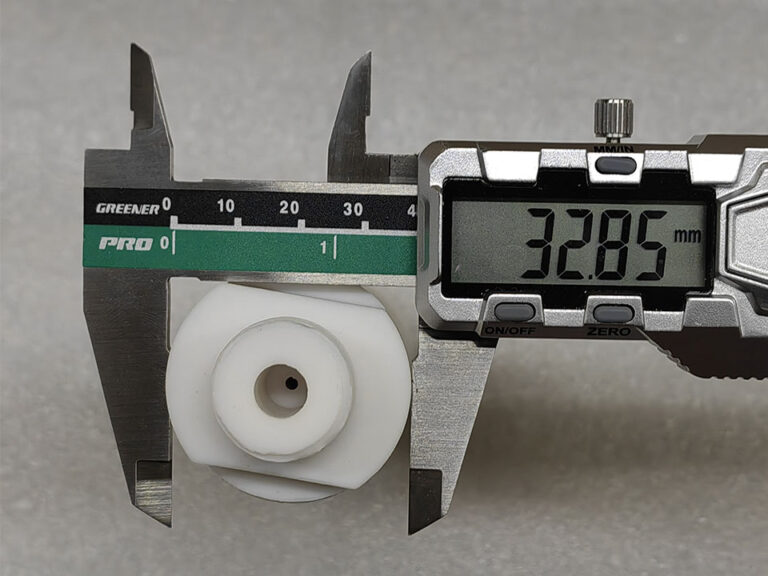
Digital caliper measuring 32.85 mm across the end of a white sintered plastic filter cartridge with a hexagonal fitting.

Pore size controls how a sintered plastic filter cartridge balances particle retention against flow resistance, but a single micron number rarely tells the full story. This guide explains how pore size distribution, wall thickness, fluid viscosity and particle behavior shape pressure drop, clogging, cleanability and service life. It also gives engineers and buyers a practical checklist for specifying pore size in an RFQ.

Read MoreHow Does Pore Size Affect the Performance of Sintered Plastic Filter Cartridges?

Are PP Filters Safe?

Three polypropylene string wound filter cartridges in protective packaging, showing different lengths and tightly wound filter media.

Polypropylene is a widely used, well-characterized filter material, but a safe cartridge depends on more than the resin. This guide explains how food-contact and drinking-water rules apply, where chemical, temperature, and pressure limits matter, what PP sediment filters cannot remove, and which documents procurement and quality teams should request before approving a cartridge for a specific application.

Read MoreAre PP Filters Safe?

How Do Polypropylene Filters Work?

Multiple white cylindrical filter elements suspended from a stainless steel plate in an industrial filtration assembly.

Polypropylene filters remove particles by mechanical separation, not chemical reaction. This guide explains how melt blown, string wound, pleated, and sintered PP structures capture solids, why nominal micron ratings can mislead, and how pressure drop, temperature, and oxidizer exposure affect performance. It also outlines the operating details buyers should confirm before specifying a PP cartridge for water treatment or industrial process liquids.

Read MoreHow Do Polypropylene Filters Work?