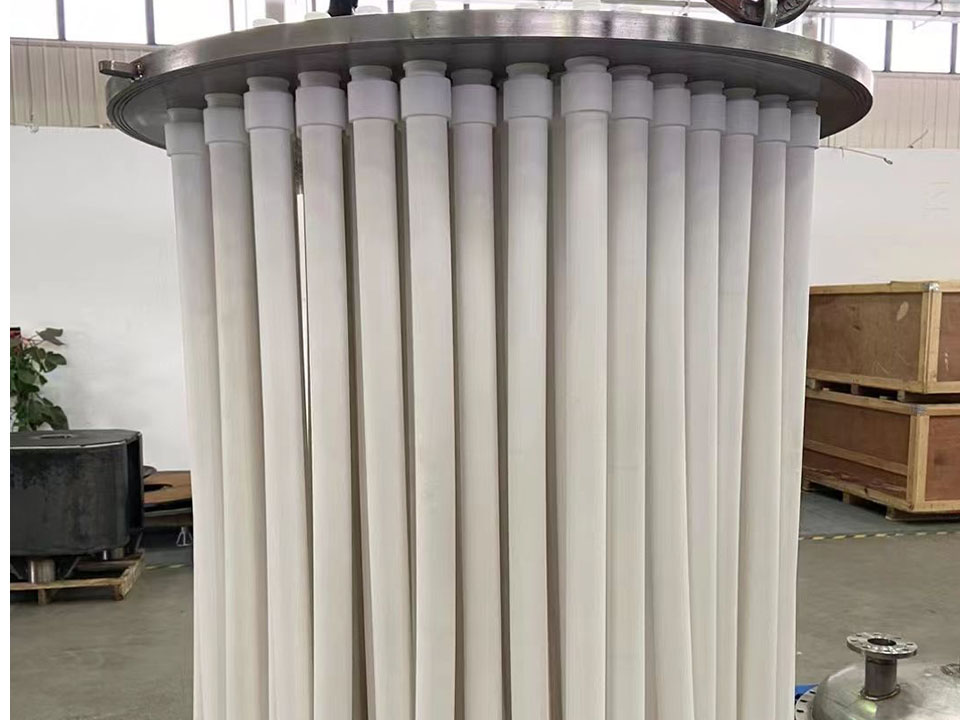
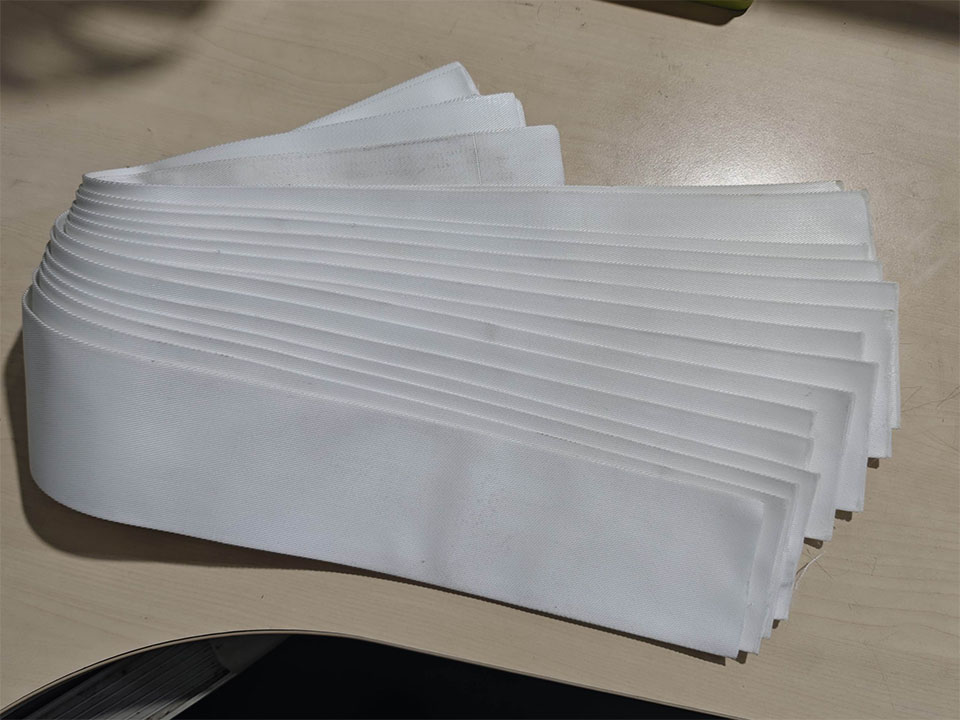
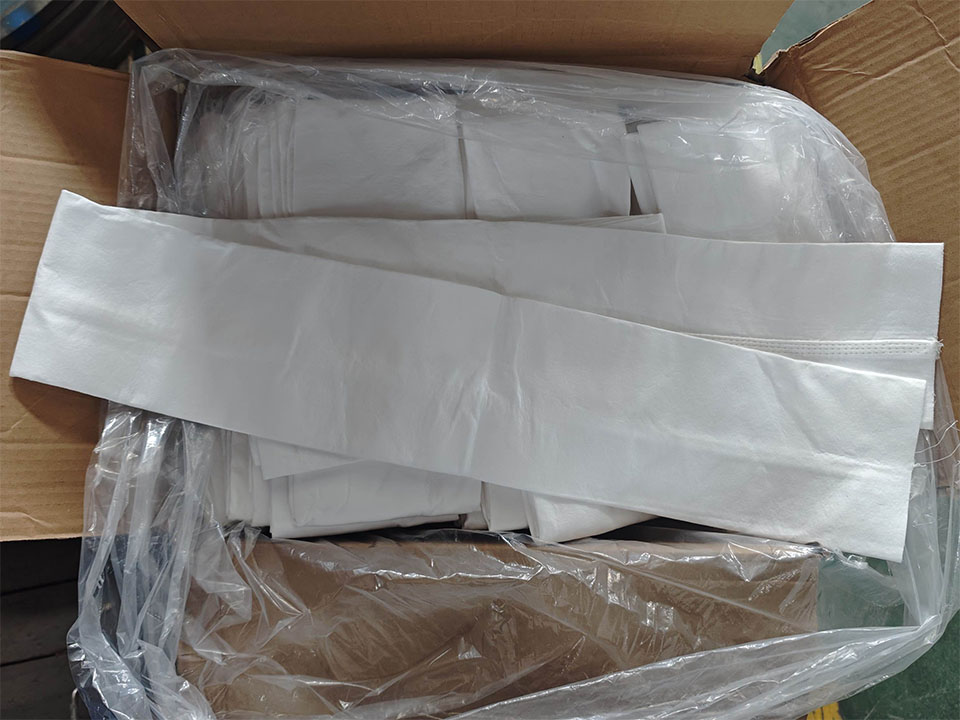
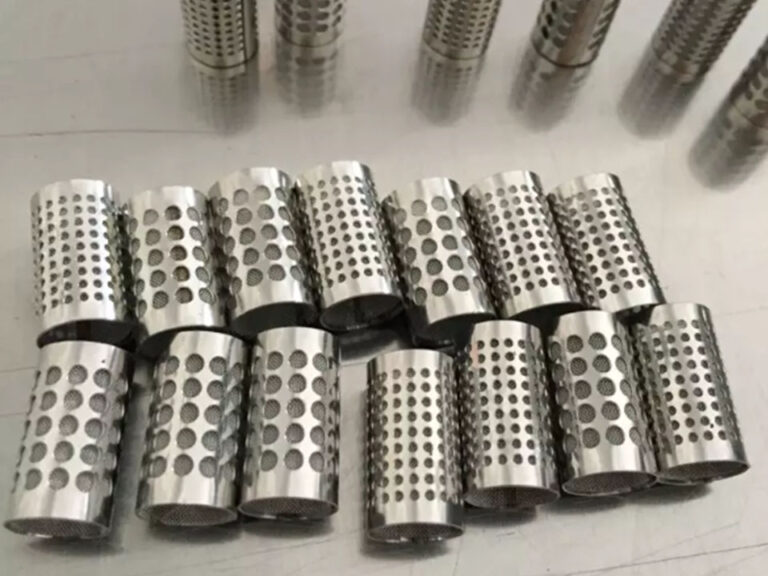
Before you leave, we invite you to talk directly with our managing team to ensure you receive the most accurate technical guidance, pricing support, and customization options for your project. Our experts can quickly evaluate your requirements, recommend suitable sintered plastic filter solutions, and help you reduce sourcing risks while improving efficiency, consistency, and long-term supply stability for your industrial applications.
Need Help Selecting the Right Filter Cartridge?
Our Sales Team
Tell our sales support team your product type, micron rating, size, application, filtered medium, working temperature, pressure, and estimated quantity. We will help you match the right sintered plastic, sintered metal, or sediment filter cartridge.
Polypropylene (PP) filters work by mechanical separation. Liquid flows through a porous or fibrous polypropylene structure, and suspended particles are held back because they cannot follow the flow path through the media. Nothing is dissolved, adsorbed, or chemically converted. The filter changes only what solids reach the equipment downstream.
That sounds simple, but “polypropylene filter” can mean several different constructions. A melt blown cartridge, a string wound cartridge, a pleated element, and a sintered PP cartridge all use the same polymer. They capture particles differently, load differently, and cost differently over their service life. Knowing how each one works is what keeps a buyer from specifying the wrong cartridge for the right material.
What Polypropylene Does in a Filter
Polypropylene is a thermoplastic that can be formed into fine fibers, bonded porous structures, or pleatable sheet media. Three of its general characteristics explain its wide use in sediment filtration:
Chemical resistance. One filter-media manufacturer describes PP fiber as having excellent resistance to acids and alkalis and good resistance to solvents. It also notes that PP does not hydrolyze, but is susceptible to oxidation. Hydrogen peroxide is one example.
Low density. PP is light enough to float in water. Fibrous PP structures can therefore be formed into thick, open media with a lot of void volume.
Processability. The polymer can be melt blown into microfibers, spun into yarn, or sintered into rigid shapes. This gives designers several ways to control pore structure.
These are general material characteristics. They are not the rated limits of any particular cartridge. Actual temperature, pressure, and compatibility limits depend on the fiber or sintering process, the cartridge geometry, the end caps and seals, and the process fluid.
The Core Mechanism: Capturing Particles in a Pore Network
Whatever the construction, PP media contains many tortuous flow paths. Particles are removed through a combination of mechanisms:
Straining (sieving). A particle larger than the local opening cannot pass through it.
Interception and impaction. A particle that is smaller than the opening still touches a fiber or pore wall as the fluid turns around it, and it sticks or is held there.
Depth entrapment. Particles lodge at different positions inside the media thickness rather than collecting on one surface.
How much each mechanism contributes depends on particle size, flow velocity, fluid viscosity, particle shape, and the media structure. This is why two cartridges with the same micron label can behave quite differently in service.
How Different PP Cartridge Constructions Work
Melt blown PP: graded depth filtration
In a melt blown cartridge, molten polypropylene is extruded through fine nozzles and drawn into microfibers by hot air. The fibers collect on a core and bond into a continuous mass. The density can be varied through the wall thickness. CFC Filtration describes its melt blown cartridges as using a graded-density fibrous structure to capture particles throughout the depth of the media.
In a graded design, flow typically passes from the outer, more open layers toward the denser inner layers. Larger particles are caught near the outside, and finer particles are held deeper in the wall. This spreads the dirt load across the media thickness rather than concentrating it on one surface. A tighter-only structure would blind quickly and shorten service life.
String wound: wound-yarn depth media
A string wound cartridge is built differently. Yarn is wound around a core in a controlled pattern, and the spacing and number of layers set the particle retention characteristics. The result is also a depth filter, but its pore structure comes from the winding geometry rather than from random microfiber lay-down. If your application calls for an OEM-specific configuration, CFC Filtration lists a custom string wound sediment filter cartridge for OEM applications.
Pleated PP: surface-dominant filtration with more area
A pleated element folds PP media into a compact pack. This greatly increases effective filtration area within a standard cartridge envelope. Pleated media often behaves more like a surface filter, with particles held at or near the upstream face. The extra area can lower the velocity through the media for a given flow, which affects pressure drop and service life.
Sintered PP: rigid porous structure
Sintered PP is made by bonding polymer particles into a rigid porous body. Because it is a self-supporting structure, it can be made into tubes, cylinders, and other geometries. Pore structure is controlled by particle size and sintering conditions. Whether a given sintered PP element can be backwashed or cleaned depends on the application and the element design, so it should not be assumed.
Quick comparison
Construction
Main capture behavior
Typical strength
Main consideration
Melt blown
Graded depth filtration
Good solids loading for sediment protection
Rating method and fiber stability should be confirmed
String wound
Wound-yarn depth media
Flexible OEM configurations
Retention depends on winding design
Pleated
Mostly surface, high area
Compact high-area element
Heavy loading can cover the pleats quickly
Sintered
Rigid porous structure
Self-supporting geometry
Cleanability and strength vary by design
This table describes general behavior, not specific product ratings.
Micron Ratings: What the Number Does and Does Not Tell You
Most buyers choose PP cartridges by micron rating, and it is the easiest specification to misread. A micron rating is a generalized indication of the media’s ability to remove particles of a stated size. It does not fully describe either efficiency or dirt-holding capacity. A “10 micron” label means little without the test method behind it. The two most commonly reported ratings, nominal and absolute, may not be comparable between suppliers because methodologies differ.
In practice, this means:
A nominal rating does not guarantee removal of all particles above that size.
An absolute rating is a more demanding claim, but it still depends on test conditions, flow rate, and challenge particles.
Ratings from different manufacturers should not be treated as interchangeable without comparing test methods.
For critical protection, ask which efficiency basis the supplier uses and request the relevant test information.
Flow, Pressure Drop, and Service Life
As particles accumulate, pressure drop across the cartridge rises. In a depth filter, this increase is usually gradual until the media loads. Then it can accelerate. Differential pressure is therefore the main practical signal for replacement, along with any process-quality requirement you have.
Several choices affect how quickly this happens:
Over-tight rating. A finer rating than the process needs shortens cartridge life with no benefit.
Flow rate. Higher flow per cartridge pushes particles deeper and raises pressure drop.
Particle load. Rust, sand, scale, and gelatinous or oily material load media in different ways.
Prefiltration. A coarser upstream cartridge can protect a finer one and often improves lifecycle cost. The result depends on the application and should be verified.
Seals and housing fit also matter. If a cartridge does not seat properly, fluid can bypass the media regardless of its rating.
Limits of Polypropylene Filtration
PP cartridges are particle filters. Keep these boundaries in mind:
They do not remove dissolved salts, ions, or chemicals. Do not expect a particle filter to do that without separate evidence.
They should not be assumed to remove bacteria, viruses, or heavy metals unless the product has been validated for that purpose.
PP is vulnerable to strong oxidizers and aggressive solvent exposure, so check compatibility against the actual process fluid and cleaning chemistry.
Temperature capability varies. For example, a fiber manufacturer’s PP felt data gives dry-condition continuous temperature limits. Do not apply that figure to a liquid cartridge. Use the datasheet rating for the specific element, at the operating pressure and fluid.
For food, beverage, pharmaceutical, or potable-water applications, check the relevant regulatory and extractables requirements for the finished cartridge, not only the base polymer.
Choosing a PP Filter Cartridge
Work from the process to the cartridge:
Define what must be removed. Identify the particle type, expected size range, and loading.
Set the required cleanliness. Decide what is needed downstream and choose the rating accordingly. Do not default to the finest available.
Confirm the fluid. Record chemistry, concentration, viscosity, and temperature, including cleaning or sanitizing cycles.
Record hydraulics. Specify flow rate, operating pressure, and allowable differential pressure.
Match the format. Confirm length, outer diameter, core, end caps, and gasket type against your housing.
Plan the construction. Choose graded melt blown, string wound, pleated, or sintered based on the loading profile and replacement strategy.
Document it for RFQ. Provide the above so the supplier can recommend a design instead of guessing.
Do polypropylene filters remove chemicals or only particles?
They remove suspended particles by mechanical separation. Standard PP sediment cartridges do not remove dissolved chemicals. Those require other processes, such as adsorption, ion exchange, or membrane separation.
Is a lower micron rating always better?
No. A finer rating can improve protection, but it also loads sooner and increases pressure drop. Choose the coarsest rating that meets the downstream requirement, and confirm how that rating is defined.
What is the difference between melt blown and string wound PP filters?
Melt blown cartridges are built from bonded microfibers, often with a graded density. String wound cartridges are built from yarn wound in layers around a core. Both are depth filters, but they differ in structure, rating behavior, and configuration options.
Can polypropylene filters be cleaned and reused?
It depends on the construction. Many fibrous depth cartridges are designed to be replaced rather than cleaned. Sintered or rigid elements may allow cleaning in some cases, but this should be confirmed with the manufacturer for the specific element and application.
What chemicals should be checked before using a PP filter?
Check strong oxidizing agents first, such as hydrogen peroxide, and then solvents, hot fluids, and any cleaning chemistry. Compatibility should be confirmed against the actual fluid, concentration, and temperature rather than a general chart.
How do I know when to replace a PP cartridge?
The usual indicators are rising differential pressure, reduced flow, or a change in downstream quality. Set the replacement point from your system’s allowable pressure drop rather than by calendar alone.
Conclusion
Polypropylene filters work by holding solid particles in a porous or fibrous structure. The performance you get depends less on the polymer than on how the media is built, how its rating is defined, and how well it matches the fluid, flow, and pressure of your system. Treat micron rating, construction, and chemical compatibility as linked decisions, and confirm them against actual operating conditions.
If you are specifying a new cartridge or replacing an existing one, share your fluid, particle profile, flow rate, temperature, and housing dimensions with CFC Filtration. The team can then review suitable PP cartridge constructions with you.