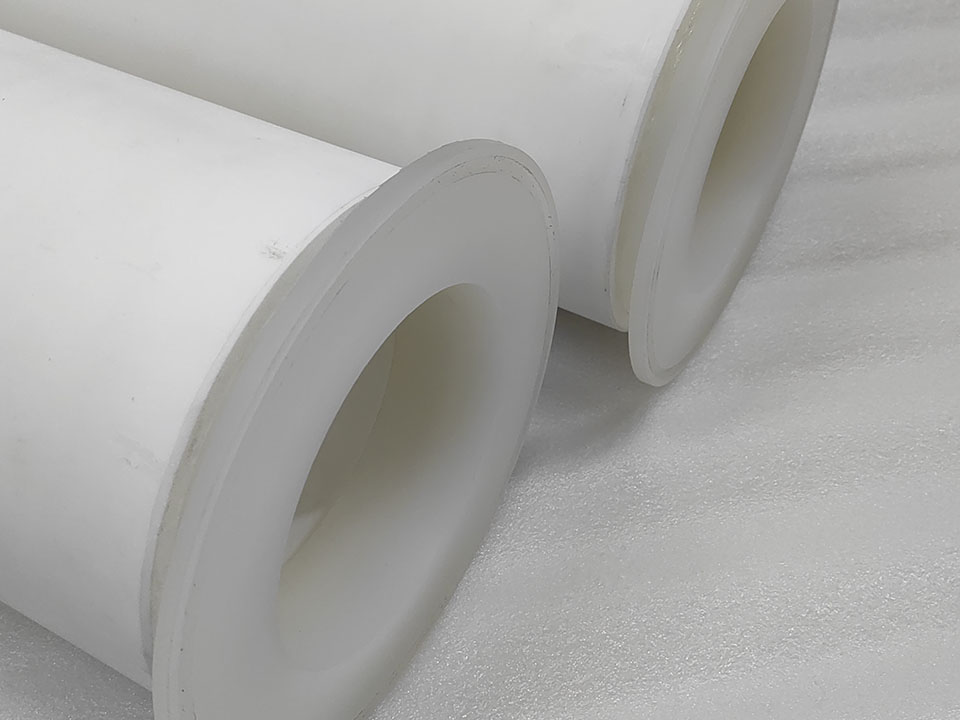
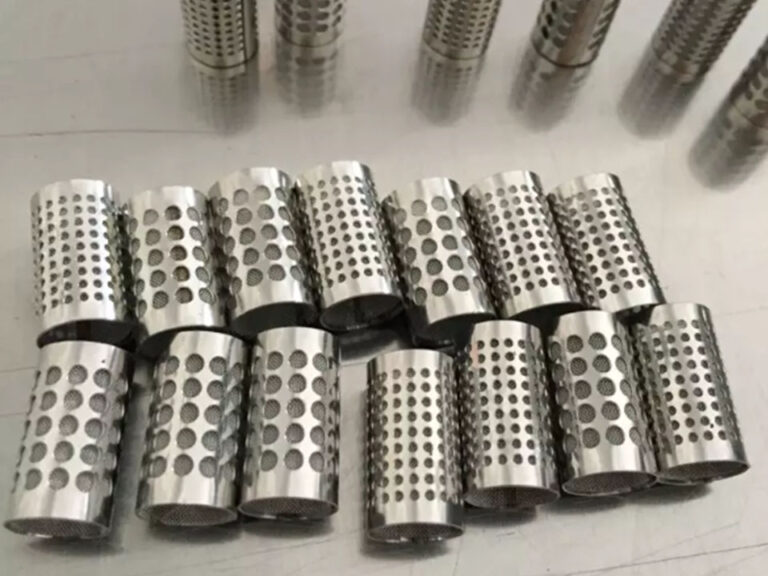
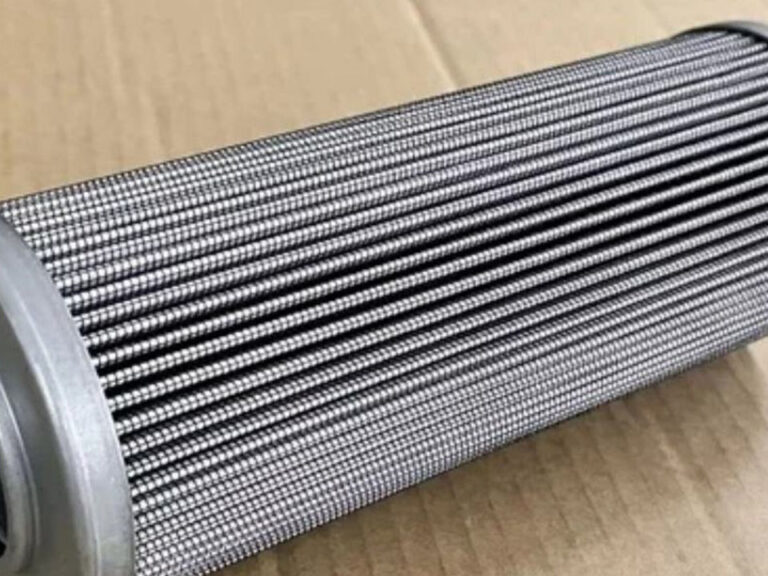
Before you leave, we invite you to talk directly with our managing team to ensure you receive the most accurate technical guidance, pricing support, and customization options for your project. Our experts can quickly evaluate your requirements, recommend suitable sintered plastic filter solutions, and help you reduce sourcing risks while improving efficiency, consistency, and long-term supply stability for your industrial applications.
Need Help Selecting the Right Filter Cartridge?
Our Sales Team
Tell our sales support team your product type, micron rating, size, application, filtered medium, working temperature, pressure, and estimated quantity. We will help you match the right sintered plastic, sintered metal, or sediment filter cartridge.
Sintered filters are rigid porous filter elements made by heating compacted particles, fibers, or layered mesh until they bond at their contact points, without melting into a solid mass. The result is a self-supporting structure with a network of interconnected pores. Fluid or gas flows through that network, and particles larger than the local pore openings are held back.
That definition sounds simple, but it matters for purchasing. A sintered element is not a spun fiber cartridge or a pleated sheet. Its pore structure, strength, cleanability, and chemical resistance all come from the base material and the way it was sintered. Knowing this helps you compare options without relying on a single micron number.
How Sintering Creates a Filter
Sintering uses heat, and often pressure, to bond particles together below the full melting point of the bulk material. In powder-based metal media, pre-alloyed powder of controlled size and shape is pressed into tubes or sheets and then sintered at high temperature. According to the American Filtration & Separations Society, powder size and shape, pressing pressure, and the sintering operation together define the pore size distribution, strength, and permeability of the finished media.
Plastic versions follow the same logic at lower temperatures. Porex describes its sintered porous plastics as thermoplastic particles bonded by controlled heat and pressure, not liquefied as in injection molding. That produces a connected pore structure whose pore size and pore volume can be tuned.
Two points follow from this:
Pore structure is a distribution, not a single number. Larger and smaller openings exist in any sintered element, so a stated rating describes a tendency, not a guarantee for every particle.
Process control matters as much as material choice. Two elements made from the same polymer or alloy can behave differently if powder grade, compaction, or sintering conditions differ.
Main Types of Sintered Filters
“Sintered filter” covers several distinct product families. They are often grouped together in search results but suit different jobs.
Type
Typical base materials
Where it tends to fit
Main limitations to check
Sintered plastic
PE, PP, PTFE, nylon (PA), UHMWPE, other engineering plastics
Liquid and gas filtration where chemical resistance, light weight, or low-cost elements are priorities
Temperature and pressure limits are lower than metal and depend on the polymer; chemical compatibility must be checked against the actual fluid
Sintered metal powder
Stainless steel 304/316L, bronze, titanium, nickel and other alloys
Higher temperature, higher pressure, or mechanically demanding service
Alloy corrosion resistance must match the fluid; cost and weight are typically higher than plastic
Sintered metal mesh
Multilayer woven wire, often stainless steel
Applications that need strength with controlled, repeatable openings; often used where cleaning is frequent
Pore openings are defined by the mesh layers, so fine particle capture depends on the construction
Sintered metal fiber or felt
Stainless steel and other alloys in fiber form
Higher dirt-holding capacity and lower pressure drop than powder media at comparable ratings, depending on design
Performance varies widely by manufacturer and construction, so request test data for the specific element
Sintered pleated metal
Metal fiber or mesh media in pleated form
Applications needing more filter area in a compact envelope
Pleat geometry affects cleanability and fouling behavior
This table gives general categories only. Operating limits depend on material, manufacturing method, element geometry, and service conditions, so treat them as questions to confirm with a supplier, not as specifications.
How Sintered Filters Capture Particles
Sintered media can work through depth filtration, surface filtration, or a combination of both.
In depth filtration, particles are trapped inside the tortuous pore network. This suits fluids with lighter, finer particle loads. In surface filtration, particles collect on the upstream face and build a cake. The AFS notes that porous metal is often run as a surface filter so the cake can be removed by back-pulse cleaning, which extends on-line service life.
Which mode dominates depends on particle size and shape, concentration, and fluid properties, not only on the element. A sintered tube that behaves as a surface filter with hard, uniform particles may load internally with sticky or deformable ones. That is the difference between an element that backwashes cleanly and one that gradually blinds.
Advantages and Limitations
Where sintered filters tend to perform well
Rigid, self-supporting form. The element holds its shape under differential pressure, with no core or cage always required, depending on the design.
Stable pore structure. Bonded particles resist media migration better than loose fiber structures, which matters when downstream contamination is a risk.
Cleanability. Many sintered elements can be backflushed, back-pulsed, or cleaned in other ways, but how well depends on the media and the contaminant. Do not assume every sintered filter is reusable.
Custom geometry. Tubes, cups, discs, plates, and rods can be produced, with end fittings suited to the housing.
Material range. Plastic and metal options cover a wide span of chemical and thermal conditions.
Where they need caution
Pressure drop. A fine-grade sintered element can have higher initial resistance than a high-void-volume alternative.
Deep contamination. Fine, oily, or sticky solids can penetrate and be difficult to remove, shortening usable life.
Upfront cost. A reusable element can cost more than a disposable cartridge. Whether it pays off depends on cleaning results and replacement frequency, which you should verify against your own process.
Fine retention claims. Do not assume a nominal rating guarantees removal of every larger particle. Absolute-rated or tested retention should be requested if the application requires it.
Sintered Filters Compared With Other Cartridge Types
Within a broader sediment filter cartridge range, sintered cartridges sit beside melt blown, high flow, pleated, and PP cartridges. The practical differences:
Melt blown cartridges use graded-density fiber structures for depth capture and are usually treated as replaceable consumables.
Pleated cartridges offer large surface area in a compact body, which often favors lower pressure drop and higher flow.
Sintered cartridges offer a rigid porous wall and, depending on material, the option of cleaning and reuse.
No single type is best across every application. If your fluid has high solids loading, a sintered element may be better as a protective or polishing stage than as the only barrier. If you filter low-solids water at high flow, a pleated or high flow design may be more practical. The cleaning approach, the replacement cost, and the maintenance schedule should drive the choice.
Most selection problems start with incomplete operating data. Before requesting a quote, collect:
Process fluid and chemistry. Name the fluid, concentration, and any cleaning chemicals. Compatibility cannot be confirmed from a material name alone.
Operating temperature and pressure. Include maximum values, pressure spikes, and thermal cycling, not only the normal point.
Flow rate and allowable pressure drop. These size the element and housing, and they set how quickly fouling becomes a problem.
Particle information. Provide size range, concentration, and type (hard, sticky, oily, or fibrous).
Retention requirement. State whether you need nominal or absolute performance and how it should be verified, such as a bubble point test or particle challenge test.
Cleaning plan. Decide whether the element will be discarded, backflushed, chemically cleaned, or ultrasonically cleaned.
Envelope and connections. Provide the dimensions, end fittings, and seal type needed to match your housing or equipment.
Common Specification Mistakes
Selecting by micron rating alone and ignoring pore-size distribution and test method.
Choosing a material from a general chemical resistance chart without checking temperature and mixture effects.
Assuming a cleanable element will recover to its original pressure drop indefinitely. Residual fouling usually accumulates over repeated cycles.
Ignoring the seal and end cap design, which can be the weak point even when the media is suitable.
Frequently Asked Questions
What are sintered filters made of?
They are made from particles or fibers that are bonded by heat. Common plastic bases include PE, PP, PTFE, and nylon. Common metal bases include stainless steel, bronze, and titanium. The right choice depends on the fluid, temperature, and pressure.
Are sintered filters depth filters or surface filters?
They can be either, or both. Fine particles can lodge inside the pore network, while larger or more uniform particles can collect on the surface. The behavior depends on particle characteristics and operating conditions.
Can sintered filters be cleaned and reused?
Often, but not always. Metal elements are frequently cleaned by backflushing, back-pulsing, or chemical or ultrasonic methods. Plastic elements may tolerate some cleaning methods but not others. Reusability depends on the media, the contaminant, and the cleaning method, so ask the manufacturer for guidance on your application.
How do I read the micron rating on a sintered filter?
Treat it as a pore-size indicator, not a guarantee. Nominal ratings do not promise removal of every larger particle. If you need defined retention, ask for the rating basis and test method.
What temperature can a sintered filter handle?
It varies widely. Technical literature from the AFS gives sintered metal media maximum temperature limits of roughly 750 to 1750°F depending on alloy and atmosphere, while plastics generally have much lower limits that depend on the polymer. Always confirm with the manufacturer for your specific element and conditions.
Do sintered filters remove dissolved contaminants?
No. They retain particles mechanically. Dissolved substances need other treatment methods such as adsorption, ion exchange, or membrane processes.
Choosing With Confidence
Sintered filters are best understood as engineered porous structures. Their value comes from a rigid, controllable pore network and, in many cases, the ability to clean the element. Their limits come from pore-size distribution, fouling behavior, and the material’s chemical and thermal envelope. The right decision comes from matching these to your actual fluid, particles, and maintenance approach, not from choosing a single “best” material.
If you are comparing sintered options for a new system or a replacement program, send your fluid, temperature, pressure, flow, particle, and dimensional requirements to CFC Filtration. The team can review your operating conditions and discuss suitable materials and cartridge configurations.