Before you leave, we invite you to talk directly with our managing team to ensure you receive the most accurate technical guidance, pricing support, and customization options for your project. Our experts can quickly evaluate your requirements, recommend suitable sintered plastic filter solutions, and help you reduce sourcing risks while improving efficiency, consistency, and long-term supply stability for your industrial applications.
Need Help Selecting the Right Filter Cartridge?
Our Sales Team
Tell our sales support team your product type, micron rating, size, application, filtered medium, working temperature, pressure, and estimated quantity. We will help you match the right sintered plastic, sintered metal, or sediment filter cartridge.
Pleated vs Non-Pleated Sintered Metal Filters: Which Should You Choose?
Choose a pleated sintered metal filter when you need more filtration area inside a fixed housing and the contaminant can be cleaned out of the pleats. Choose a non-pleated (cylindrical) sintered cartridge when mechanical strength, a simple geometry, or reliable reverse cleaning matters more than maximum area. Neither design is better in every duty. The wrong choice usually shows up as rapid differential pressure rise, a cartridge that cannot be cleaned back to a useful baseline, or a structure that deforms under pressure surges.
This guide explains where the real differences come from, how to match each design to the process, and what to specify so a supplier can quote the right element.
What “Pleated” and “Non-Pleated” Mean in Sintered Metal Filtration
The terms describe the cartridge geometry, not the metal or the sintering process.
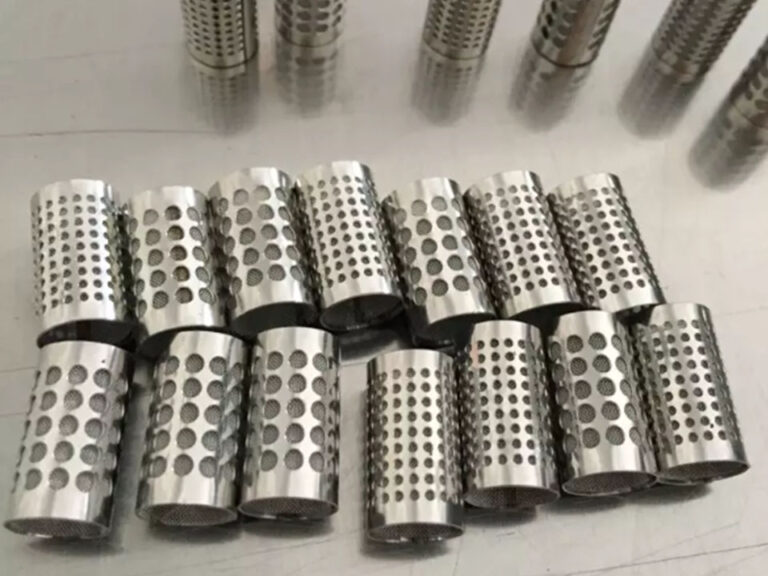
A non-pleated sintered metal cartridge has a straight cylindrical filter wall. The media may be sintered metal powder, multilayer sintered wire mesh, or sintered metal fiber felt formed into a tube. Flow passes through the wall, and the available area is set mainly by outer diameter and length.
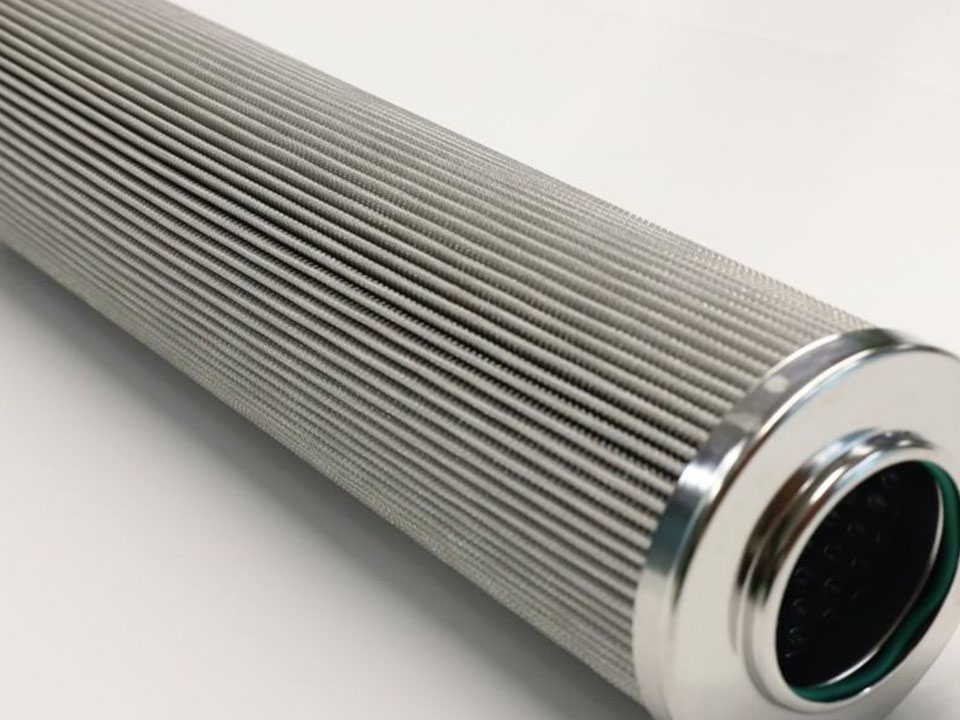
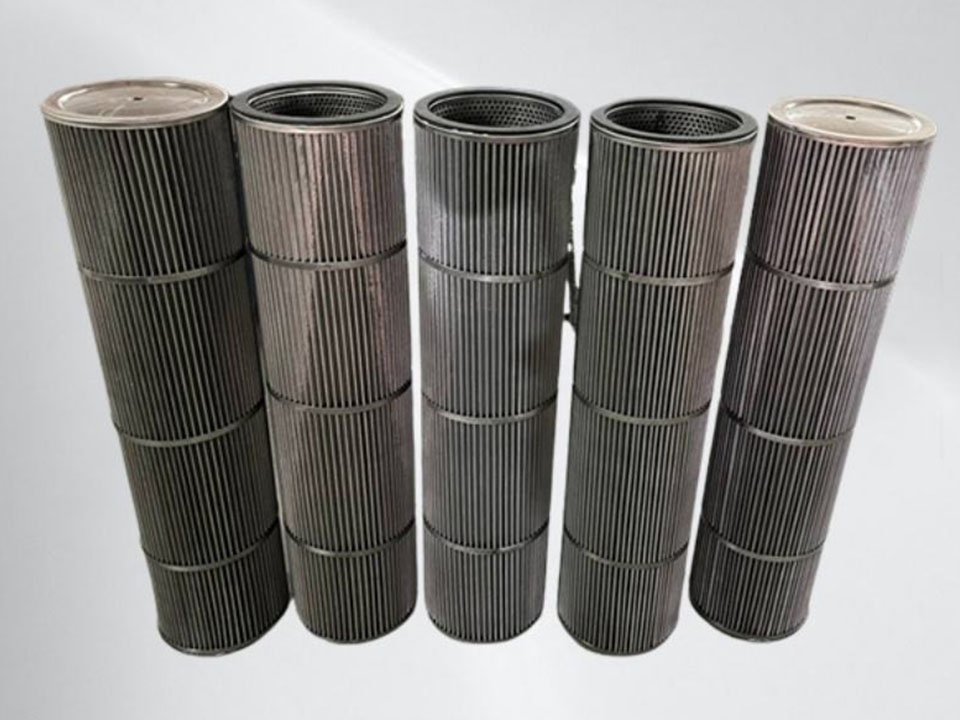
A pleated sintered metal cartridge folds a flat sintered medium, such as sintered mesh or fiber felt, into a pleat pack around a support core. The same housing envelope then contains much more media. This is usually done with a medium that is thin and flexible enough to fold. Rigid sintered powder bodies are generally not pleated.
CFC Filtration lists several constructions in its sintered metal filter cartridges range, including powder, multilayer mesh, fiber felt, pleated metal, and perforated-plate composite mesh designs. The comparison below applies to the general engineering question rather than to any one catalog item.
Why Surface Area Is the Main Reason to Pleat
Face velocity is flow rate divided by effective filtration area. For the laminar flow typical of fine porous media, pressure drop across a clean medium rises roughly in proportion to velocity, fluid viscosity, and medium thickness, and falls as permeability rises (Darcy’s law). If a pleated design provides much more effective area in the same housing, the same flow runs at a lower velocity through the media, so clean pressure drop falls.
The same added area also gives contaminant more room to accumulate before differential pressure reaches the change-out or cleaning limit. Porvair describes its pleated sintered metal fiber cartridges as using a pleatable structure to provide higher filtration area per cartridge. It pairs that with high void volume and in-situ cleanability.
The word “effective” matters. Nominal pleated area is not the same as usable area. Pleats packed too tightly restrict flow into the valleys, trap contaminant, and make cleaning harder. Part of the media is also lost to end caps, support structures, and bonded or welded zones. Two pleated cartridges of the same size can behave differently, so compare effective area and pleat spacing, not the pleat count alone.
Where Non-Pleated Sintered Cartridges Hold the Advantage
Pleating adds area, but it also adds components and variables: pleat pack, core, outer support, end caps, and seals. A straight-walled cartridge has fewer of these.
Structural rigidity. Sintered powder and multilayer mesh bodies form a self-supporting porous wall. That is useful where the cartridge sees pressure pulses, thermal cycling, reverse flow, or rough handling. A pleated pack depends on its core and cage for the same resistance, so the allowable differential pressure, in both flow directions, should be stated and confirmed with the supplier.
Predictable geometry. A tubular element is easier to dimension, seal, weld, and reproduce, which can simplify custom OEM designs and repeat orders.
Surface access. A smooth cylindrical wall is easier to clean than a deep pleat valley. For sticky, fine, or compressible deposits, that can matter more than area.
Lower area need. If contaminant loading is modest and the housing already offers enough area, pleating may add cost without adding value.
Cleaning and Fouling: The Deciding Factor in Many Applications
Cleanability is one of the main reasons users choose metal media over disposable media, but “cleanable” depends on the contaminant, the cleaning method, and the geometry.
Mott Corporation’s technical paper on hot gas filtration with sintered metal media distinguishes depth filtration, where particles are captured inside the medium, from surface filtration, where they collect on the surface. It also names cake release (blowback cleanability) as a core selection criterion alongside efficiency and mechanical strength. That distinction carries over to the pleated question.
Surface-loading contaminants that form a releasable cake, such as dry powders and catalyst fines, are generally better suited to pleated, cleanable media because the cake can be dislodged.
Deep-loading, sticky, or gelatinous contaminants can lodge within the media and the pleat valleys. A rigid cylindrical element and an appropriate cleaning method, such as backflushing, ultrasonic cleaning, or chemical cleaning, may recover performance better.
Fibrous or stringy material can bridge across closely spaced pleats and blind them.
Do not assume that all sintered elements can be cleaned the same way. Allowable cleaning methods depend on the medium, the construction, and the process fluid, and they should be confirmed for the specific cartridge and contaminant.
Pleated vs Non-Pleated Sintered Metal Filters: Qualitative Comparison
The table compares general design tendencies. It does not give product specifications, and actual performance depends on the media, construction, and service conditions.
Selection factor
Pleated sintered cartridge
Non-pleated (cylindrical) sintered cartridge
Effective area in a given envelope
Higher, if pleat spacing is well designed
Lower; set by diameter and length
Clean pressure drop at equal flow
Often lower, because face velocity is lower
Often higher at the same flow
Contaminant holding space
Generally greater
More limited
Structural rigidity
Depends on core, cage, and end-cap design
Typically self-supporting porous wall
Resistance to reverse flow or pressure surges
Must be verified for the specific design
Often a strength of rigid constructions; still must be verified
Cleaning access
Pleat valleys can retain contaminant
Smooth wall is generally easier to access
Design complexity
More components and interfaces
Simpler geometry
Typical media
Sintered mesh, metal fiber felt
Sintered powder, multilayer mesh, felt tube
Selecting by Operating Condition
Low-to-Moderate Loading, High Flow, Limited Space
This favors pleated elements. If the housing cannot grow, more area is the most direct way to lower pressure drop and extend cleaning intervals, provided the contaminant releases from the pleats.
High Differential Pressure or Pressure Surges
This favors a rigid, non-pleated construction, or a pleated one with a demonstrated support design. State both normal and maximum differential pressure, including upset conditions and the direction of reverse flow.
Sticky, Viscous, or Fouling-Prone Fluids
Higher viscosity raises the pressure drop for any medium, and pleated area helps. But if the deposit is hard to remove from pleat valleys, the area advantage can disappear after the first few cycles. Test or review cleaning recovery, not just the initial pressure drop.
Gas Filtration and Dry Dust
Pleated metal elements are widely used where pulse-jet or blowback cleaning is applied and a releasable cake forms. Confirm the cleaning pressure, the pulse frequency, and the temperature range with the supplier for the actual element.
Tight Retention Requirements
Do not treat micron rating alone as the deciding factor. A nominal rating does not guarantee that every larger particle is removed, and ratings from different suppliers may use different test methods. Ask how the rating is defined and, where retention is critical, how it is verified.
Common Specification Mistakes
Comparing pleated and cylindrical cartridges by outside dimensions only. Compare effective media area and the face velocity at design flow.
Specifying only micron rating. Include the rating definition, contaminant, and cleanliness target.
Omitting reverse flow. If the cartridge will be backflushed or exposed to flow reversal, say so.
Ignoring chemical compatibility. Material compatibility cannot be assumed from general data. Review the actual process fluid, concentration, and temperature, including cleaning chemicals.
Assuming equal cleaning recovery. Two media can have the same initial pressure drop and very different recovery after fouling.
Overlooking seals and end fittings. Bypass around a seal can undo the filtration rating, whichever media is chosen.
Information to Prepare Before You Request a Quote
A supplier can recommend a design much faster with these details:
Fluid type (liquid, gas, or steam), viscosity, and density
Design and peak flow rate
Operating temperature range and working pressure
Normal and maximum differential pressure, and flow direction
Contaminant type, particle size range, and approximate loading
Required retention rating and how it should be verified
Cleaning method and expected cleaning frequency
Housing dimensions, end connections, and sealing arrangement
Material preferences, such as 304, 316L, or an alloy, and process chemistry
If you already have an existing cartridge or housing drawing, include it.
Is a pleated sintered metal filter always better than a non-pleated one?
No. Pleating increases potential filtration area, but it also adds interfaces and can complicate cleaning. A non-pleated cartridge may be the better choice where rigidity, simple geometry, reverse flow, or sticky contaminants dominate the duty.
Does more filtration area mean a finer filter?
No. Area affects face velocity, pressure drop, and holding capacity. Retention depends on the medium’s pore structure and how the rating is defined and tested.
Can sintered metal powder cartridges be pleated?
Typically not. Pleating requires a medium that can be folded, such as sintered wire mesh or metal fiber felt. Rigid powder-sintered bodies are normally produced as tubes, discs, or other formed shapes.
Can pleated metal cartridges be cleaned and reused?
Many are designed to be cleaned, but cleaning success depends on the contaminant, the pleat geometry, and the method. Backflushing, ultrasonic cleaning, and chemical cleaning are not interchangeable. Ask for guidance specific to your fluid and cartridge.
What temperature and pressure can these cartridges handle?
It depends on the alloy, the media, how the cartridge is built, and the service conditions. General figures should not be treated as product ratings. Provide your operating temperature, pressure, and differential pressure so the limits can be reviewed for the actual design.
Making the Call
Start with the duty. If space is limited and the contaminant releases cleanly, pleated media usually offers a lower clean pressure drop and more room for contaminant. If the process involves pressure pulses, reverse flow, or hard-to-release deposits, a rigid non-pleated cartridge is often the safer starting point. In either case, verify effective area, cleaning recovery, and structural limits against your actual conditions instead of relying on nominal figures.
Choosing between pleated and cylindrical elements is easier when the operating data is on the table. Send your flow rate, temperature, differential pressure, contaminant details, and housing information to CFC Filtration, and the team can review suitable media and cartridge configurations with you.