Before you leave, we invite you to talk directly with our managing team to ensure you receive the most accurate technical guidance, pricing support, and customization options for your project. Our experts can quickly evaluate your requirements, recommend suitable sintered plastic filter solutions, and help you reduce sourcing risks while improving efficiency, consistency, and long-term supply stability for your industrial applications.
Need Help Selecting the Right Filter Cartridge?
Our Sales Team
Tell our sales support team your product type, micron rating, size, application, filtered medium, working temperature, pressure, and estimated quantity. We will help you match the right sintered plastic, sintered metal, or sediment filter cartridge.
What Is the Difference Between Cartridge and Pleated Filter?
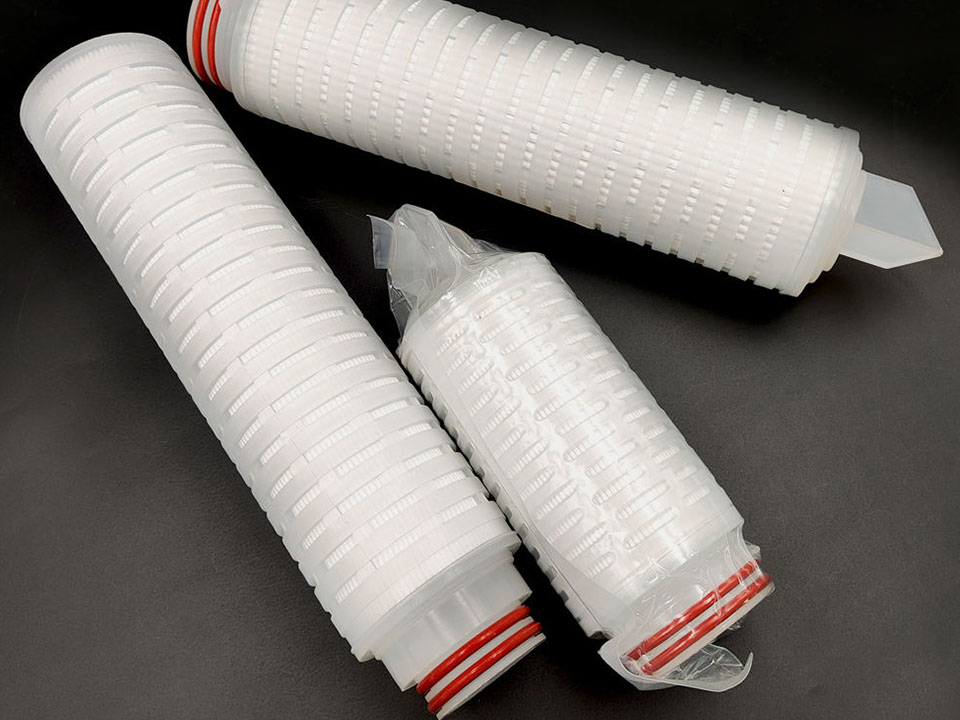
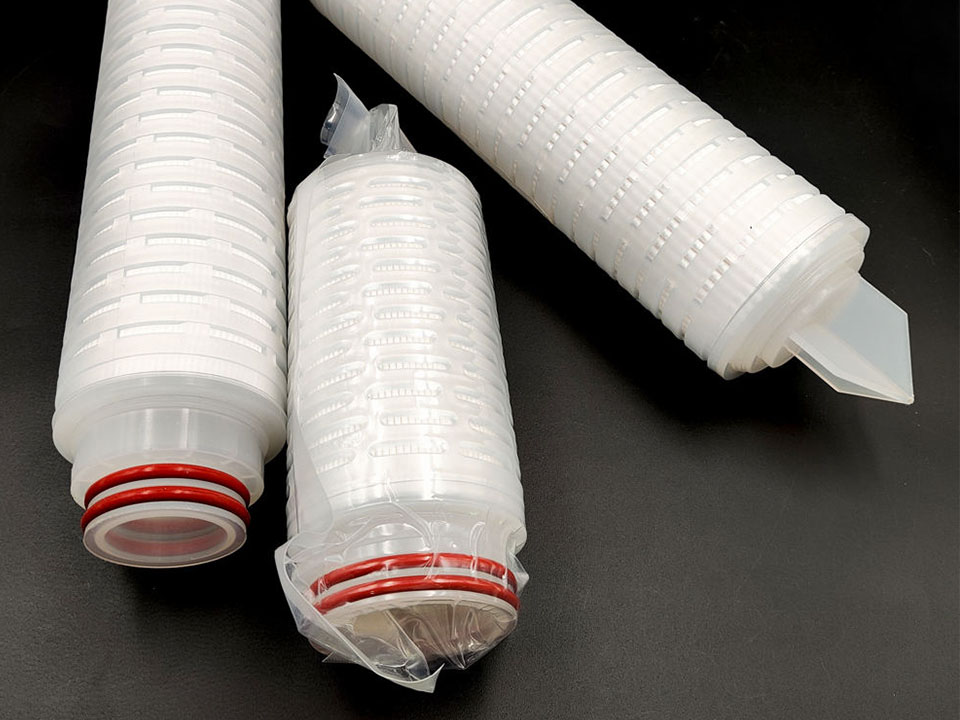
A pleated filter is a type of cartridge filter, not an alternative to one. “Cartridge” describes the format: a replaceable, usually cylindrical element that sits inside a housing. “Pleated” describes how the media is built, with a thin sheet folded into pleats to pack more filtering area into the same envelope. When buyers ask about the difference, they usually mean pleated cartridges versus non-pleated, depth-style cartridges such as melt blown, string wound, or resin-bonded elements.
That distinction affects pressure drop, service life, particle retention behavior, and cost per changeout. Choosing on micron rating alone is a common specification mistake, because two cartridges with the same rating can behave very differently under load.
Cartridge Filter vs Pleated Filter: Sorting Out the Terminology
A cartridge filter can be built several ways. The most common constructions for liquid sediment removal are:
Melt blown: Polymer fibers are blown into a graded-density mass, so the structure is typically more open on the outside and tighter toward the core.
String wound: Yarn is wound around a core in a controlled pattern.
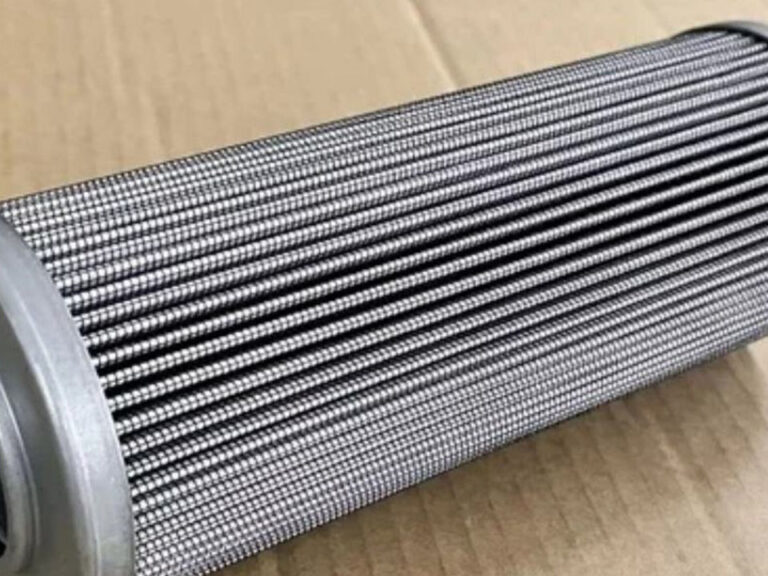
Pleated: A sheet of membrane or nonwoven media is folded, supported, and sealed between end caps.
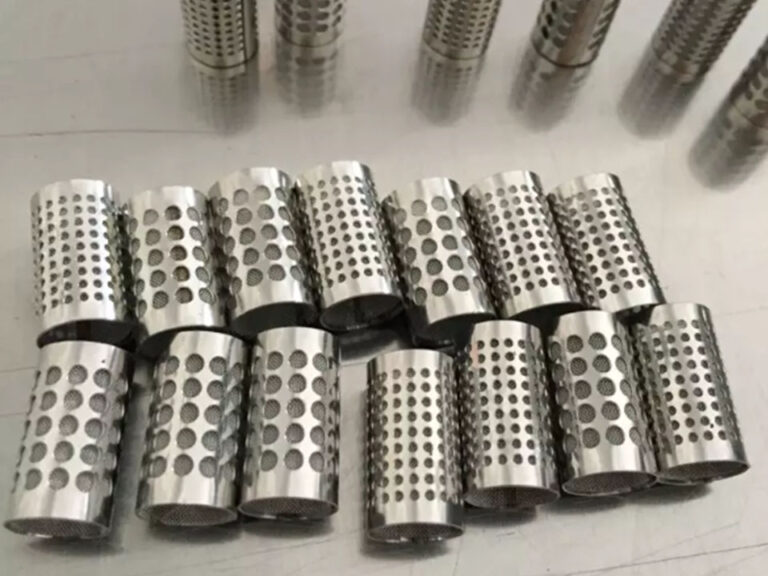
Sintered: Plastic or metal particles are fused into a rigid porous body.
Pleated elements are therefore one branch of the cartridge family. CFC Filtration’s sediment filter cartridge range reflects this, with melt blown, high flow, pleated, sintered, and PP cartridges listed as separate construction options for different sediment loads and process conditions.
How Each Design Captures Particles
Depth cartridges
In a depth cartridge, particles are captured throughout the thickness of the media. Large particles tend to lodge near the outer layers, and finer ones travel deeper before being retained. This is why a graded-density structure can tolerate a wide particle size distribution and a heavy solids load without blinding immediately.
Depth media has a trade-off. Its rating is usually nominal, so a cartridge rated at 5 microns may pass some particles larger than 5 microns, particularly as differential pressure rises. Retention depends on the media, the particle shape, flow rate, and fluid viscosity.
Pleated cartridges
A pleated cartridge presents a much larger media area to the flow than a non-pleated element of the same length and outside diameter. Because the same flow is spread across more area, face velocity falls, and initial pressure drop is usually lower. Capture happens mostly at or near the media surface, and the thinner media often gives a more consistent pore structure than a thick, random fiber mass.
Pleating does not make a filter better in every respect. Fine particles loading a thin medium can form a surface cake. That cake helps retention at first, but it raises differential pressure. If solids are sticky, fibrous, or gelatinous, they can bridge the pleat valleys and leave much of the added area unused.
Pleated vs Depth Cartridges: Engineering Comparison
The table below is qualitative. Actual performance depends on media, pleat geometry, flow rate, and fluid properties, so treat it as a framework for asking suppliers the right questions rather than as specification data.
Factor
Pleated cartridge
Depth cartridge (melt blown, string wound)
Primary capture mode
Mostly surface or near-surface
Throughout media thickness
Effective media area
Large relative to cartridge size
Smaller; defined by cylinder surface
Initial pressure drop
Often lower at the same flow
Often higher at the same flow
Tolerance for heavy, mixed-size solids
Best with moderate loading and a defined particle range
Generally better with broad size distributions
Rating consistency
Often tighter, depending on media and test method
Typically nominal; varies with design
Sensitivity to flow surges
Pleats and end seals can be stressed by pulsation
Generally more tolerant of surges
Cleanability
Limited; most are replaced
Limited; most are replaced
Typical cost basis
Higher unit price, potentially fewer changeouts
Lower unit price, potentially more frequent changeouts
The cost row needs care. Lower or higher lifecycle cost depends entirely on the application. A pleated cartridge that lasts longer can be cheaper per month of service in a clean, steady stream. In a stream with high or variable solids, a lower-cost depth element or a staged arrangement may cost less.
What Surface Area Does and Does Not Change
More media area lowers flow per unit of area, and that has three practical effects:
Lower clean differential pressure. This leaves more pressure budget before the system reaches its changeout limit.
More holding capacity for a given particle type. Capacity still depends on particle size, shape, and how the cake forms.
Better fit for continuous service. Stable flow and fewer changeouts matter where shutdowns are costly.
Area does not fix a mismatch between the media and the contaminant. A pleated element facing large debris can blind quickly. For that reason, many systems pair a coarser depth or bag prefilter upstream with a pleated cartridge as the final polishing stage. CFC Filtration’s pleated cartridge overview describes the pleated structure and its use as pre-filtration or fine sediment control. It also states that its pleated cartridges use polypropylene or polyester media. Confirm the exact construction and ratings for your part number before specifying it.
Reading Micron Ratings Correctly
Micron ratings cause more confusion in this comparison than anything else.
Nominal rating: The manufacturer’s stated size above which a defined percentage of particles is retained. The percentage and test method vary by supplier.
Absolute rating: A stricter claim that particles above a stated size are retained at a very high efficiency under defined test conditions.
Beta ratio: The ratio of upstream to downstream particle counts at a given size, measured in multi-pass testing.
Neither rating alone guarantees removal of every particle larger than the stated size. Two products, one labeled nominal and one absolute, may not be comparable unless you know the test method and the retention percentage. Ask for the efficiency at the stated size, the test fluid, and the test flow rate.
Also keep in mind that these ratings describe particle retention. They say nothing about removing dissolved substances.
Other Variants Worth Knowing
Activated carbon pleated cartridges
Some pleated cartridges combine particle filtration with adsorption media. Particle retention and adsorption are different functions. The first depends on pore structure and media area, and the second depends on contact time, carbon type, and the specific compound being targeted. CFC Filtration’s activated carbon pleated filter cartridge for process water is an example of this type. Verify the adsorption target and flow conditions with the supplier rather than assuming general carbon performance.
Sintered cartridges
Sintered elements are rigid and can tolerate higher differential pressure than most soft-media cartridges. Whether they can be cleaned and reused depends on the material, pore structure, and contaminant, so do not treat reusability as a given. They are a separate category from pleated and depth-style designs.
How to Choose Between Pleated and Depth Cartridges
Work through these inputs before choosing a construction:
Contaminant profile: Particle size range, shape, concentration, and whether the solids are hard, soft, fibrous, or sticky.
Required retention: Which particle size must be controlled, and with what efficiency. State whether a nominal or absolute rating is required.
Flow rate and allowable differential pressure: Include both the clean starting pressure drop and your terminal changeout limit.
Fluid properties: Viscosity, temperature, pH, and chemical composition. Check compatibility of the media, core, end caps, and seals against the actual process fluid.
Operating pattern: Continuous or batch, steady or pulsating, with or without frequent start-stops.
Housing and fitment: Length, outside diameter, end-cap style, and gasket or O-ring arrangement.
Changeout economics: Labor, downtime, disposal, and inventory, not just the price per cartridge.
Pleated cartridges generally suit clean-to-moderate streams where steady flow, stable pressure drop, and a defined retention target matter. Depth cartridges often fit heavy or widely varying solids, or applications where unit cost matters most. If the stream is mixed, a staged design usually makes more sense than choosing one construction for the whole job. Browse the pleated filter cartridge product category to see the configurations available.
Common Specification Mistakes
Comparing a nominal rating to an absolute rating as though they were equivalent.
Using a pleated cartridge as the first and only stage on a high-solids stream.
Ignoring pulsation or water hammer, which can damage pleat packs and seals.
Matching the cartridge length but not the end-cap and seal style.
Assuming a longer service life without knowing the contaminant load.
Skipping chemical compatibility review for gaskets, cores, and adhesives.
Frequently Asked Questions
Is a pleated filter the same as a cartridge filter?
No. Pleated filters are a subset of cartridge filters. “Cartridge” refers to the replaceable element format, and “pleated” refers to the folded media inside it. Melt blown and string wound elements are also cartridges.
Are pleated filters better than melt blown cartridges?
Neither is better in every case. Pleated cartridges often provide more media area and lower initial pressure drop. Melt blown cartridges usually offer lower unit cost and handle broader particle distributions well. The right choice depends on the contaminant and flow conditions.
Can pleated cartridges be cleaned and reused?
Most industrial pleated sediment cartridges are designed for replacement, not repeated cleaning. Cleaning can leave residue, damage the media, or fail to free particles trapped deep in the pleats. Check the manufacturer’s guidance for your specific element.
Does a lower micron rating always mean better filtration?
No. A tighter rating retains finer particles but also loads faster and raises pressure drop sooner. Choose the coarsest rating that meets your downstream protection requirement, and confirm how that rating was determined.
What information do I need for a replacement pleated cartridge?
Provide the existing part number or drawing, dimensions, end-cap and seal style, micron rating and type, media material, flow rate, operating temperature and pressure, and the process fluid. Photos or a sample of the current cartridge also help with matching.
Conclusion
The key point is that “pleated” is a construction method within the cartridge category. The real decision is between a pleated element, with more media area and mostly surface capture, and a depth element, with capture through the thickness of the media. Match the construction to the particle load, required retention, flow behavior, and total cost of ownership, and consider staging when one design cannot cover the whole duty.
If you are comparing pleated and depth cartridges for a new system or a replacement program, share your operating conditions with CFC Filtration. Include the fluid, flow rate, temperature, differential pressure limits, housing dimensions, and target particle size. Our team can then discuss suitable media and cartridge configurations for your application.