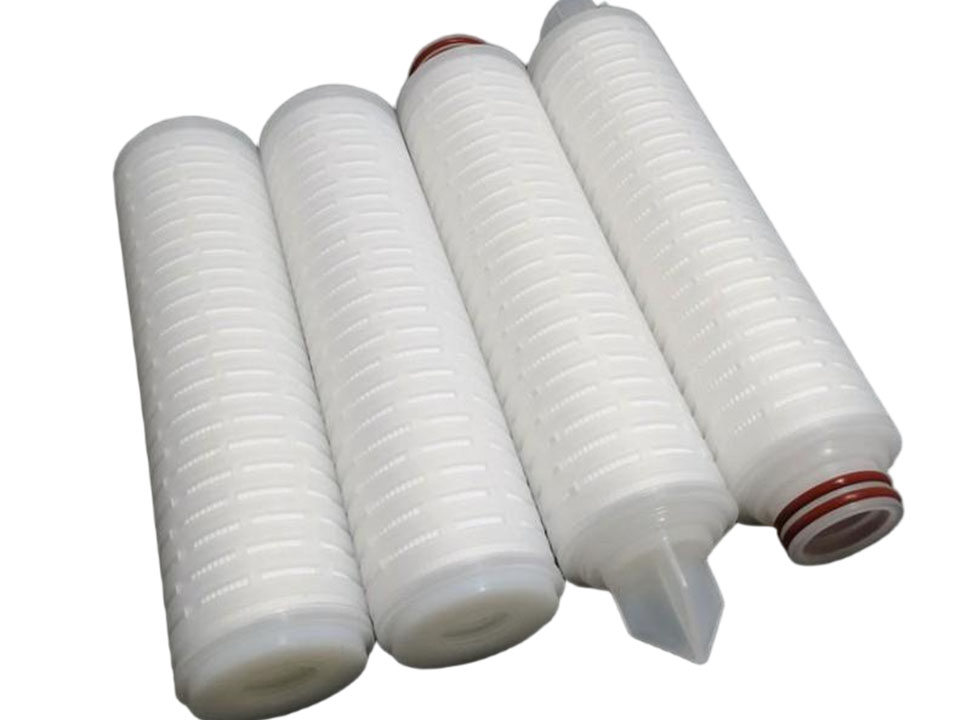
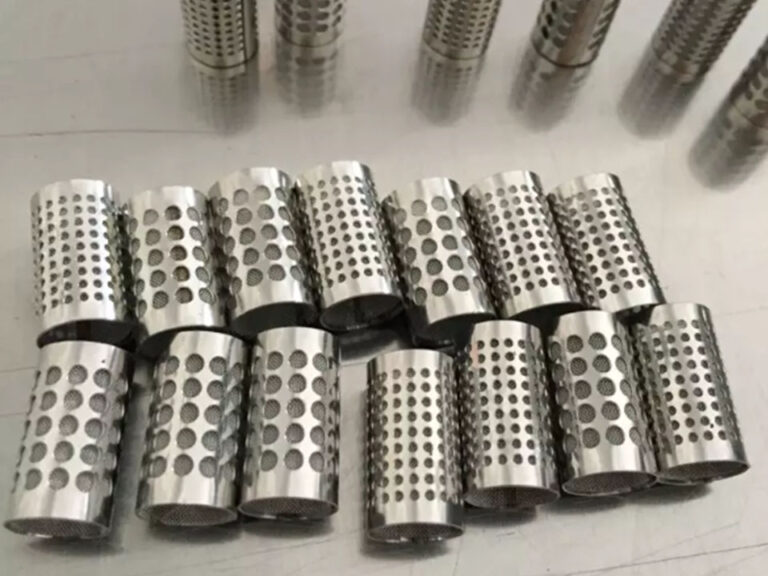
Before you leave, we invite you to talk directly with our managing team to ensure you receive the most accurate technical guidance, pricing support, and customization options for your project. Our experts can quickly evaluate your requirements, recommend suitable sintered plastic filter solutions, and help you reduce sourcing risks while improving efficiency, consistency, and long-term supply stability for your industrial applications.
Need Help Selecting the Right Filter Cartridge?
Our Sales Team
Tell our sales support team your product type, micron rating, size, application, filtered medium, working temperature, pressure, and estimated quantity. We will help you match the right sintered plastic, sintered metal, or sediment filter cartridge.
Spin Down vs. Cartridge Sediment Filters: Which Is Better?
Neither filter is better in every case. A spin down filter is the better first stage when the water carries heavy, coarse sediment and you want to flush it out without shutting down. A cartridge sediment filter is the better choice when you need finer, more consistent particle retention. In many real systems the two work in series, with the spin down protecting the cartridge.
The question matters because the two filters fail in different ways. An undersized or poorly matched cartridge clogs early and drives up changeout labor. A screen with the wrong opening size passes the fine particles that foul downstream membranes, carbon beds, or valves. Choosing between them means looking at the sediment load, the particle size you need to control, and how much maintenance the site can support.
How Each Filter Works
Spin Down Filters
A spin down filter is a flushable screen housing. Water enters the housing, and a cleanable screen holds back particles larger than its openings. Heavier solids drop into a collection area under the screen. Opening a purge valve flushes that material out, usually without removing the housing or interrupting service for long. Manufacturers such as Rusco offer both polyester and stainless steel screens, and Safe Water Technologies describes the design as an inline centrifugal sediment filter with a purge valve and cleanable, reusable screens.
Retention depends mainly on the screen opening. Screens are specified by mesh number, and published ranges for this product style run from 24 mesh (about 711 microns) to 1000 mesh (about 15 microns). Many compact centrifugal separators stop at roughly 200 mesh, or about 85 microns. That is a useful reference point, but each manufacturer’s datasheet governs the actual figure.
Cartridge Sediment Filters
A cartridge sediment filter is a replaceable element in a housing. The media type determines how it captures particles:
Melt blown polypropylene uses a fibrous structure, often with graded density, so particles are captured through the thickness of the wall (depth filtration).
Pleated cartridges add surface area, so they usually handle more flow or hold more dirt in the same envelope.
Sintered cartridges use a rigid porous structure and can be suited to cleanable or more demanding service, depending on material.
High flow cartridges use a larger diameter to pass more flow through a smaller housing footprint.
CFC Filtration covers these formats on its sediment filter cartridges page, including melt blown, high flow, pleated, sintered, and PP cartridges. Dimensions, micron ratings, materials, and end connections can be matched to a system.
Spin Down vs. Cartridge: Side-by-Side Comparison
Factor
Spin down filter
Cartridge sediment filter
Typical role
Coarse-to-medium sediment removal, first stage
Medium-to-fine sediment removal, main or finishing stage
Capture mechanism
Surface screening plus gravity and centrifugal settling
Depth or surface filtration, depending on media
Fine particle range
Limited by screen mesh; the finest common screens are around 15 microns
Wide range of ratings depending on media and construction
Cleaning
Flush through a purge valve; screen can be rinsed and reused
Replace; some rigid types can be cleaned, depending on material
Behavior under heavy loading
Sediment is flushed out before it accumulates on the screen
Dirt accumulates in or on the media until replacement
Maintenance pattern
Periodic flushing, occasional screen inspection
Scheduled or differential-pressure-based changeouts
Consumables
Few
Recurring cartridge purchases
Fit for custom specifications
Defined by the housing and screen options offered
Dimensions, media, ratings, and end connections can be customized
Treat the table as a framework. Pressure ratings, flow limits, and screen options vary by product, so verify them on the datasheet of the specific housing or cartridge you intend to buy.
Where Spin Down Filters Make Sense
Spin down filters earn their place when sediment load is high or unpredictable. Well water, surface water, and pumped reservoir sources can all carry sand, scale, and rust flakes that would shorten the life of a fine cartridge. A flushable screen takes that coarse load and sends it to drain.
Boshart’s technical support describes the same pattern. Spin-out filters work well with heavy sediment loads, and they are commonly installed ahead of a 10-micron, 5-micron, or finer cartridge so the cartridge lasts longer.
Their limits are just as clear:
A coarse screen will not control fine particles. A 100-mesh screen has openings around 150 microns, which is too open to protect a 5-micron downstream device.
The finest screens are still around 15 microns. If your process needs tighter control than that, a screen alone is not enough.
Flushing is only effective if someone does it. A purge valve left closed turns the housing into a sediment pocket.
Water use is a factor. Each flush sends water to drain, which matters where water is expensive or discharge is regulated.
Where Cartridge Sediment Filters Make Sense
Cartridges are the better choice when the target particle size is smaller than a screen can handle, or when the system needs consistent, repeatable retention. They are also the standard answer for protecting RO membranes, carbon stages, spray nozzles, pumps, heat exchangers, and instruments.
Depth media such as melt blown polypropylene tends to suit general-purpose prefiltration and moderate sediment loads. Pleated media offers more surface area in the same envelope, which can help when flow is high or when you want a longer interval between changeouts. Sintered media suits conditions where a rigid element is needed. Which one is right depends on particle size distribution, fluid chemistry, temperature, and allowable pressure drop, not on the media name alone.
A two-stage layout puts a spin down filter first and a cartridge second. The spin down removes the coarse fraction and flushes it away. The cartridge then handles the fine fraction at the micron rating the process requires.
The benefit is a more favorable loading pattern for the cartridge. It sees fewer large particles, so it fills more slowly, and differential pressure rises more gradually. The cost is a second housing, extra piping, and one more item to maintain.
This layout is usually worth considering when:
Sediment load varies widely, as with well water after heavy rain or pumping from a stream or lake.
Cartridge changeouts are frequent, costly, or hard to schedule.
Downstream equipment needs fine filtration, but the source water also carries coarse debris.
It is usually unnecessary when the incoming water is already clean and stable, because the extra stage adds little. It is also unnecessary when a properly sized high-capacity cartridge can handle the load at an acceptable replacement interval.
If the downstream stage is carbon, a sediment stage upstream helps keep particulates from loading the carbon media. For that kind of arrangement, see CFC Filtration’s activated carbon pleated filter cartridge for process water. Carbon is chosen for adsorption, not sediment removal, so it should follow a sediment stage rather than replace one.
Specification Checklist Before You Buy
Whichever filter you choose, define these items first.
Target particle size. State the smallest particle that must be controlled and whether the rating is nominal or absolute. A nominal rating does not guarantee removal of every larger particle.
Sediment type and load. Sand, rust, silt, and scale behave differently. Provide a water analysis or turbidity data if available.
Flow rate and allowable pressure drop. Clean pressure drop and the terminal differential pressure that triggers service both matter.
Operating temperature and pressure. Check the rating of the specific product, since limits depend on material, construction, and geometry.
Fluid compatibility. Confirm compatibility against the real process fluid, not just a generic “water” description.
Housing and connection details. Specify dimensions, port size, end caps, and sealing method. For replacement projects, a sample or drawing of the existing cartridge helps.
Maintenance capacity. Be honest about whether the site will flush a purge valve on schedule or prefers a replace-and-forget cartridge.
Lifecycle cost. Compare consumables, labor, downtime, and water used for flushing, not just unit price.
Common Selection Mistakes
Choosing a screen mesh that is too coarse. Spin down filters are often bought as a cure-all, then paired with a downstream device that needs much finer protection.
Judging cartridges on price alone. A cheaper cartridge that loads in half the time can cost more in labor and downtime.
Skipping differential pressure monitoring. Pressure gauges on both sides of the filter show when it is loading, so replacement can follow actual conditions rather than a guess.
Ignoring turbidity swings. A system sized for average sediment may fail during seasonal peaks or after pump disturbances.
FAQ
Can a spin down filter replace a sediment cartridge?
Sometimes, if the application only needs coarse particle control. The finest common screens reach about 15 microns, and many applications need finer retention than that. If a downstream membrane, carbon bed, or instrument needs 5 microns or finer, a cartridge stage is still needed.
Are spin down filters really reusable?
The screens are designed to be flushed, rinsed, and reused, which is the main reason people choose them. Screens still need inspection for damage, scale, or clogging that flushing does not clear.
Which costs less over time?
It depends on the site. Spin down filters reduce consumable use, but they add flushing labor and water use. Cartridges add recurring purchases and changeout time. Compare both against your own sediment load and labor costs. Generic savings figures are unreliable.
Should the spin down go before or after the cartridge?
Before. Its job is to remove coarse solids so the finer cartridge is not overloaded. Placing it after the cartridge would defeat that purpose.
What micron rating should a sediment cartridge have after a spin down filter?
It depends on what must be protected downstream and how fine the remaining particles are. Common practice puts a 10-micron, 5-micron, or finer cartridge after a spin down, but the right rating depends on your application, flow rate, and acceptable pressure drop.
How do I know when a cartridge needs replacement?
Rising differential pressure across the housing is the most reliable indicator, along with falling flow. Water quality, fluid chemistry, and the manufacturer’s recommendations also influence the replacement interval.
Conclusion
The spin down filter and the sediment cartridge answer different parts of the same problem. The spin down is built to handle heavy, coarse debris and flush it away. The cartridge is built to deliver finer, more consistent retention at a defined micron rating. When the water source is dirty and the downstream requirements are strict, using both usually gives the most reliable result. When the water is clean and the particle requirements are straightforward, one well-matched cartridge may be enough.
Discuss Your Sediment Filtration Requirements
If you are comparing filtration stages or replacing an existing cartridge, CFC Filtration can help review your requirements. Send your target micron rating, flow rate, operating temperature and pressure, fluid type, housing dimensions, and any drawings or samples. From there, the team can discuss suitable cartridge materials and configurations for your system.