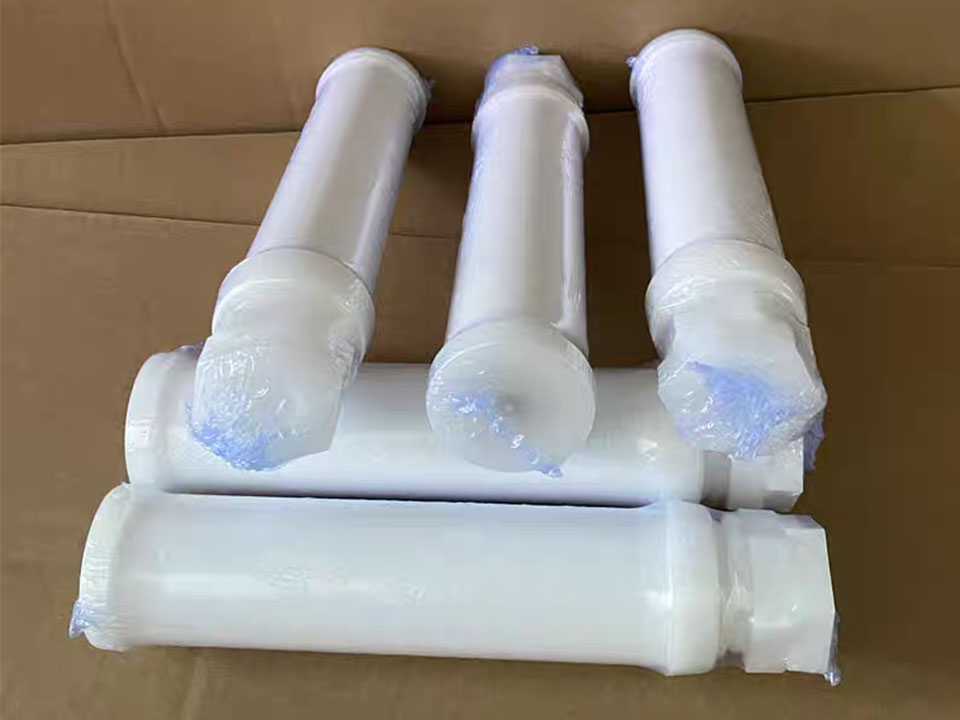
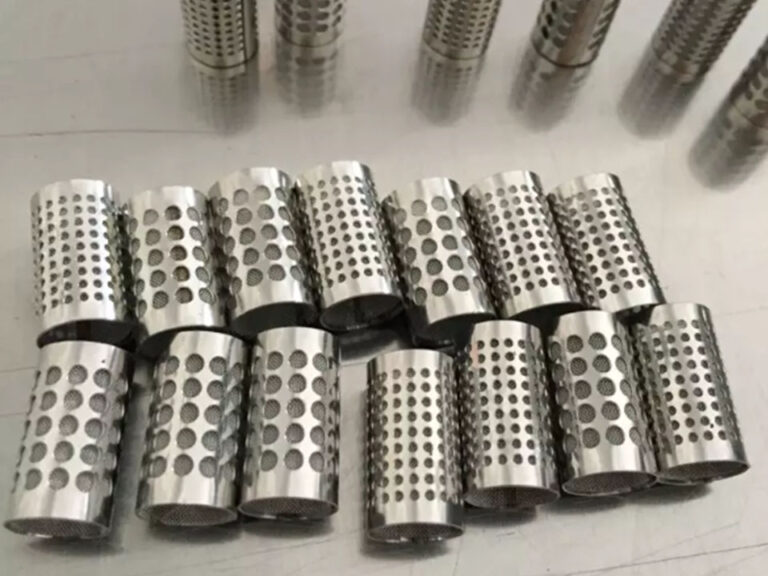
Before you leave, we invite you to talk directly with our managing team to ensure you receive the most accurate technical guidance, pricing support, and customization options for your project. Our experts can quickly evaluate your requirements, recommend suitable sintered plastic filter solutions, and help you reduce sourcing risks while improving efficiency, consistency, and long-term supply stability for your industrial applications.
Need Help Selecting the Right Filter Cartridge?
Our Sales Team
Tell our sales support team your product type, micron rating, size, application, filtered medium, working temperature, pressure, and estimated quantity. We will help you match the right sintered plastic, sintered metal, or sediment filter cartridge.
How to Choose the Right Engineering Plastic Filter Cartridge for Industrial Use
The right engineering plastic filter cartridge is the one whose polymer survives your fluid and temperature, whose pore structure gives acceptable flow at your allowable pressure drop, and whose geometry seals and cleans properly in your housing. Micron rating comes after those checks. Many specification problems start when buyers reverse this order. They fix a micron number first and then find that the polymer swells, softens, or wets differently than expected.
This guide gives engineers and sourcing teams a practical selection sequence for sintered plastic filter cartridges. It applies to process liquids, gas filtration, venting, and OEM equipment protection.
What “Engineering Plastic” Means for a Sintered Filter Cartridge
A sintered plastic cartridge is a rigid porous element. Polymer powder is heated and pressed so the particles bond at their contact points. The pore network stays interconnected instead of being melted shut. Porex describes this process as bonding with controlled heat and pressure, with pore size and pore volume adjusted to control flow and particle retention.
Polyethylene and polypropylene are the most common sintered polymers. “Engineering plastic” is a looser term. In filtration it usually refers to polymers chosen for mechanical strength, heat tolerance, or chemical resistance beyond the commodity polyolefins. Examples include nylon (PA), PTFE, UHMWPE, and, in the wider porous-plastics industry, PVDF and PEEK. Availability varies by manufacturer, so confirm any specialty polymer with your supplier. You can review CFC Filtration’s sintered plastic filter cartridge materials and its engineering plastics overview for the polymer families it addresses.
Start With the Operating Window
Temperature and chemistry eliminate candidate materials before pore size matters. A materials overview from R+F FilterElements makes the same point. It also notes that ratings are relative and that concentration, temperature, and exposure time can change them considerably.
Chemistry and Temperature
Collect these items before comparing polymers:
Exact fluid composition and concentration, including cleaning agents and sanitizers
Continuous operating temperature and peak excursions, such as steam-out or hot cleaning
Operating pressure and maximum differential pressure across the element
Presence of oxidizers, solvents, strong acids, or strong alkalis
Whether the fluid is aqueous, organic, or a gas
General polymer behavior gives a first screen. Polyolefins such as PE and PP are broadly resistant to many acids and alkalis but are limited with some solvents and oxidizing agents. Nylon tolerates many solvents and alkalis but is generally weak against strong acids and oxidizers. PTFE has the widest chemical resistance of the common options. These are general characteristics, not product ratings. Compatibility must be checked against your actual process fluid, and where data is inconclusive, sample testing in the real medium is the safer route.
Wetting Behavior
PE, PP, and PTFE are inherently hydrophobic. That can be an advantage for venting and gas applications, where the element should repel liquid. It can be a problem for aqueous filtration if the element must wet spontaneously. If wetting matters, ask the supplier how the material and pore structure behave with your fluid.
Comparing Common Materials
The table below compares general material tendencies only. It contains no product specifications. Actual limits depend on the polymer grade, sintering process, wall thickness, and service conditions.
Material
General strengths
Typical watch-outs
Often considered for
PE / HDPE
Broad chemical resistance, wide pore-size range, cost-effective
Moderate temperature capability; limited with some solvents and oxidizers
General process liquids, water, pneumatic protection, venting
UHMWPE
Polyolefin chemistry with higher wear and impact resistance
Temperature limits similar in class to other polyethylenes; confirm with supplier
Abrasive particles, mechanically demanding duty
PP
Good acid and alkali resistance, light weight
Sensitive to strong oxidizers; limited with some solvents
Chemical process fluids, water, equipment protection
PTFE
Very broad chemical resistance, high temperature capability among plastics
Higher cost; hydrophobic; lower mechanical rigidity than some alternatives
Aggressive chemicals, hot service, gas and venting
Nylon (PA)
Good mechanical strength, tolerance of many solvents and alkalis
Weak against strong acids and oxidizers; moisture absorption can affect dimensions
Solvent-based fluids, mechanically loaded designs
PVDF, PEEK, other specialty polymers
Higher strength or temperature capability in specific grades
Availability and lead time vary; not offered by every supplier
High-purity, hot, or demanding duty
No single material wins across all categories. PTFE gives wide chemical latitude but may be unnecessary, and expensive, for a mild aqueous stream where PE would work. Nylon may suit a solvent loop but fail quickly in an acidic cleaning cycle.
Pore Size, Flow, and Pressure Drop
Once the polymer family is narrowed, define the retention requirement.
Read Micron Ratings Carefully
Sintered media have a distribution of pore sizes, not a single hole diameter. A nominal rating describes the approximate size at which the media is expected to retain particles. It does not guarantee removal of every larger particle. If your process needs defined retention efficiency, ask for the test method and conditions behind the rating. Bubble-point testing is commonly used to characterize the largest pores, but it measures wetting-fluid behavior and does not by itself prove particle removal efficiency.
PolyStar’s porous plastics design guide lists average pore size, porosity, and pore-size distribution as the defining structural parameters. It notes that a tighter distribution gives more predictable flow behavior. Published ranges differ by manufacturer and polymer, so treat any quoted range as supplier-specific.
Balance Retention Against Pressure Drop
Finer pores improve retention but increase resistance and reduce flow. Thicker walls add strength and loading capacity but also add resistance. In practice, define these together:
Required flow rate at the target viscosity
Allowable clean-element pressure drop
Expected terminal differential pressure before cleaning or replacement
Particle size distribution and solids loading
Fluid viscosity matters as much as pore size. A cartridge that passes water easily may have a much higher pressure drop with a viscous fluid at the same flow rate.
Geometry, Strength, and Sealing
Sintered plastic elements can be made as tubes, cylinders, rods, discs, plates, and custom shapes. Geometry decisions often decide whether a good material works in service.
Surface area. A longer or larger-diameter tube provides more area and a lower pressure drop at the same flow.
Flow direction. Check whether the element is loaded from outside to inside or the reverse. Mechanical strength under differential pressure differs between the two.
End connections and seals. The elastomer is often the first component to fail, according to the R+F guide. Check O-ring and gasket compatibility with the fluid and temperature, not just the porous body.
Bonded or welded parts. Adhesives, end caps, and cores must also be compatible.
Do not assume every sintered plastic element can be cleaned the same way. Backflushing, ultrasonic cleaning, and chemical cleaning each work only within the limits of the polymer, pore size, and contaminant. Fine particles can lodge deep in the pore network. Sticky or fibrous contaminants may be difficult to remove. If the cleaning chemical is harsher than the process fluid, it becomes the controlling compatibility case.
Lifecycle cost is therefore a decision about cleanability versus replacement, not only unit price. If a cartridge cannot be restored reliably, a lower-cost disposable element may be the better choice. If it can, and the process tolerates the cleaning step, a more durable polymer can reduce replacement frequency. Validate this with your own cleaning protocol rather than relying on generic lifetime claims.
Common Specification Mistakes
Choosing by micron rating alone and leaving out temperature, chemistry, and differential pressure
Treating a nominal rating as absolute removal efficiency
Checking the porous body but not seals, end caps, or adhesives
Ignoring cleaning chemicals and steam or hot-water excursions
Expecting a plastic filter to remove dissolved contaminants
Specifying PTFE or another premium polymer when the process does not require it
Skipping a trial in the real fluid when compatibility data is uncertain
What to Include in an RFQ
A complete request lets a supplier recommend a material instead of guessing. Include:
Process fluid or gas, with concentrations and cleaning agents
Operating and peak temperature
Operating pressure and maximum differential pressure
Required flow rate and fluid viscosity
Target retention size and the particle or contaminant to be removed
Installation envelope, end connection, and sealing arrangement
Cleaning method and expected cleaning frequency
Any regulatory or documentation requirements, stated explicitly
Annual volume and whether the design is custom or OEM
FAQ
Is an engineering plastic filter cartridge always better than a PE or PP cartridge?
No. Engineering polymers add value when temperature, chemistry, or mechanical load exceeds what polyolefins handle well. For mild conditions, PE or PP may meet the requirement at lower cost.
Which material is best for strong chemicals?
PTFE has the broadest general chemical resistance among common sintered plastics, but suitability still depends on the specific fluid, concentration, and temperature. Verify against your actual process.
Can I choose a cartridge by micron rating alone?
No. The rating is only one parameter. Material compatibility, flow rate, pressure drop, geometry, seal compatibility, and cleaning method all affect whether the filter works.
Can sintered plastic cartridges be cleaned and reused?
Sometimes. Reusability depends on the polymer, pore size, contaminant, and cleaning method. Fine or sticky contaminants may limit restoration, so test the cleaning procedure on your process.
Do sintered plastic filters remove dissolved contaminants?
Not by mechanical retention. They are designed for particle filtration, venting, or flow control. Dissolved species need a different process, such as adsorption or membrane separation.
What information does a supplier need to recommend a cartridge?
Fluid composition, temperature, pressure, flow, retention target, dimensions, connection type, and cleaning method. The more complete the data, the lower the risk of a mismatch.
Conclusion
Selecting an engineering plastic filter cartridge is a sequence. Screen polymers by temperature and chemistry, define pore size against flow and pressure-drop limits, verify geometry and seals, and plan for cleaning or replacement. A material that looks strong on paper can still fail if one component, such as the seal, is mismatched. Where the data is uncertain, a sample trial in the real fluid is better than an assumption.
If you are specifying a sintered plastic element for a new design or a replacement, send your operating conditions, target retention, and installation details to CFC Filtration. The team can discuss suitable materials, pore structures, and cartridge configurations for your application.