Before you leave, we invite you to talk directly with our managing team to ensure you receive the most accurate technical guidance, pricing support, and customization options for your project. Our experts can quickly evaluate your requirements, recommend suitable sintered plastic filter solutions, and help you reduce sourcing risks while improving efficiency, consistency, and long-term supply stability for your industrial applications.
Need Help Selecting the Right Filter Cartridge?
Our Sales Team
Tell our sales support team your product type, micron rating, size, application, filtered medium, working temperature, pressure, and estimated quantity. We will help you match the right sintered plastic, sintered metal, or sediment filter cartridge.
Sintered Fiber Felt vs Sintered Mesh: Which Filter Media Is Better?
Neither medium wins on every duty. Sintered metal fiber felt is usually the stronger choice when the fluid carries a heavy or widely distributed particle load and you want long run times between cleanings. Sintered wire mesh is usually the stronger choice when you need a defined, repeatable cut point, a thin rigid sheet, and a surface that releases solids during backwash or blowback. Which one fits depends on how your contaminants load the media, how the element will be cleaned, and how much differential pressure it must carry.
That is the practical split, but a micron number alone will not settle it. Two elements both labeled 10 µm can behave very differently in service. This guide explains why, and what to specify before you request a quotation.
How Each Media Is Built
Sintered Metal Fiber Felt
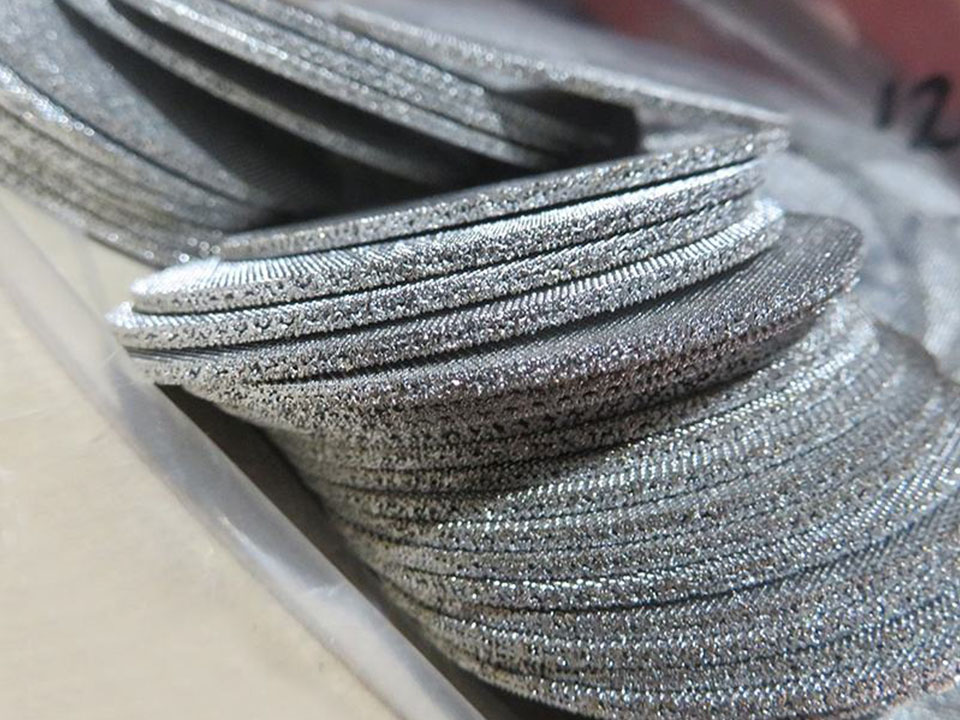
Sintered fiber felt is a non-woven web of fine metal fibers, commonly stainless steel, that is laid up, compressed, and sintered so the fibers bond where they touch. The result is a three-dimensional network with a high void fraction and irregular, tortuous flow paths. Fiber diameter, web thickness, and compaction control the effective pore size. Some designs vary fiber density through the thickness to improve loading behavior.
CFC Filtration’s sintered felt filters page describes this media as a depth filter intended for applications such as chemical processing, gas purification, and catalyst recovery.
Sintered Wire Mesh
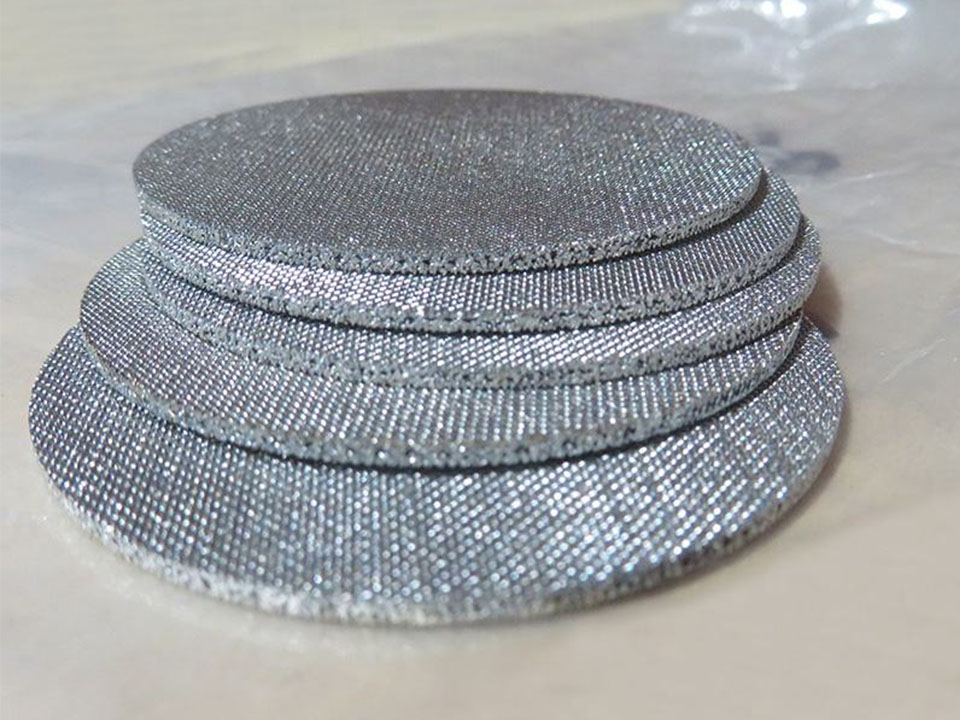
Sintered mesh is a laminate of woven wire cloths bonded by heat and pressure. A typical stack includes a protective outer layer, a fine filtration layer that sets the rating, a distribution layer that spreads flow, and coarser support layers that carry the mechanical load. BOPP’s sintered wire cloth literature describes five-layer constructions of this kind, with absolute filter fineness of 5–120 microns for one grade and 15–90 microns for another. Those are one manufacturer’s published figures, not a general limit for all sintered mesh.
Depth Filtration vs. Surface Filtration
This is the core difference, and it drives almost every other tradeoff.
Felt captures particles throughout its thickness. Large particles lodge near the upstream face, and smaller ones travel deeper before they are trapped. Because the structure is open and the path is long, felt typically holds more dirt per unit of filter area than a mesh laminate of similar rating, and pressure drop tends to rise more gradually as it loads.
Mesh works mainly at the surface. Particles larger than the openings in the filtration layer are stopped there and build a cake. That cake can help retention, and it is also what a backwash or gas pulse removes. The tradeoff is that fine contaminants close to the opening size can blind the filtration layer faster, and the available dirt-holding volume is smaller.
Mott’s technical paper on hot gas filtration with sintered metal media makes the same point from the gas side. Depth and surface modes both need to be considered during media selection, and cake release (blowback cleanability) ranks alongside efficiency, corrosion resistance, and strength as a design criterion.
Why the Same Micron Rating Does Not Mean the Same Performance
Rating basis. Mesh ratings are tied to the size of the openings in the filtration layer, while felt ratings reflect a distribution of pore sizes in a random fiber network. Ask whether the figure is nominal or absolute, and which test defines it, such as a bubble point method or a particle challenge test.
Particle shape. Elongated particles and fibers can pass through a mesh opening that would stop a sphere of the same width.
Deformable contaminants. Gels and soft particles can squeeze through depth media under pressure or smear across a mesh surface. Neither medium is immune, and a pilot test on the real fluid is the reliable check.
Side-by-Side Comparison
Factor
Sintered Fiber Felt
Sintered Mesh
Structure
Random 3D metal fiber network
Layered woven wire cloth laminate
Main mechanism
Depth filtration
Surface filtration with some depth effect across layers
Pore definition
Distribution of pore sizes
Defined openings in the filtration layer
Dirt-holding capacity
Generally higher per unit area
Generally lower
Pressure drop at fine ratings
Often lower, because of higher porosity
Often higher as the rating gets finer
Backwash and blowback
Less complete; solids sit inside the media
Generally easier; solids stay near the surface
Rigidity
Depends on the support design
Laminates are inherently stiff and flat
Typical fit
High loading, fine particles, long run times
Sharp cut point, frequent regeneration, CIP
The table describes general tendencies. Actual values depend on alloy, fiber or wire diameter, thickness, and cartridge construction, so confirm them against supplier data for the specific element.
Cleaning, Regeneration, and Service Life
Cleaning is where many selections are decided.
Mesh releases surface cake relatively well. Smooth, flat laminate surfaces suit reverse-flow cleaning, and BOPP positions its low-layer-count TOPMESH 2 construction for cleaning-in-place filters in pharmaceutical processing. That is one manufacturer’s positioning, but it illustrates why mesh is common where regular regeneration is part of the plan.
Felt is harder to clean fully, because particles are embedded in the structure. Reverse flow may recover much of the pressure drop, and chemical or ultrasonic cleaning can recover more, depending on the contaminant. Residual pressure drop after each cycle often creeps up. For some duties the felt is run to a pressure-drop limit and then replaced or reconditioned, which is acceptable when run times are long.
Reusability is not guaranteed for either medium. It depends on the contaminant, the cleaning method, and whether the fluid contains sticky, gelatinous, or reactive solids.
Strength, Temperature, and Pressure
Sintered mesh laminates are rigid, and perforated support layers or plate composites can raise collapse resistance further. Fiber felt is thinner and more flexible, so the cartridge design (pleating, support core, end caps, weld quality) usually determines pressure capability.
Both can be made from corrosion- and heat-resistant alloys, but temperature and pressure limits are not properties of the category. They depend on alloy, thickness, support structure, geometry, and the actual service conditions, including pressure pulses and reverse flow. Chemical compatibility must be checked against the real process fluid. Request documented limits for your exact element rather than relying on typical figures.
Choosing by Application
Felt is often the better fit when:
The stream carries fine particles and variable loading, and long runs between cleanings matter
Pressure drop at a given retention level is a constraint
The duty involves gas filtration or catalyst recovery with finer solids
Elements will be replaced or reconditioned rather than backwashed daily
Mesh is often the better fit when:
You need a specific, repeatable opening size
Backwash, blowback, or CIP is part of the process design
Solids are relatively coarse or form a releasable cake
The element sees pressure pulses or high differential pressure and needs a rigid structure
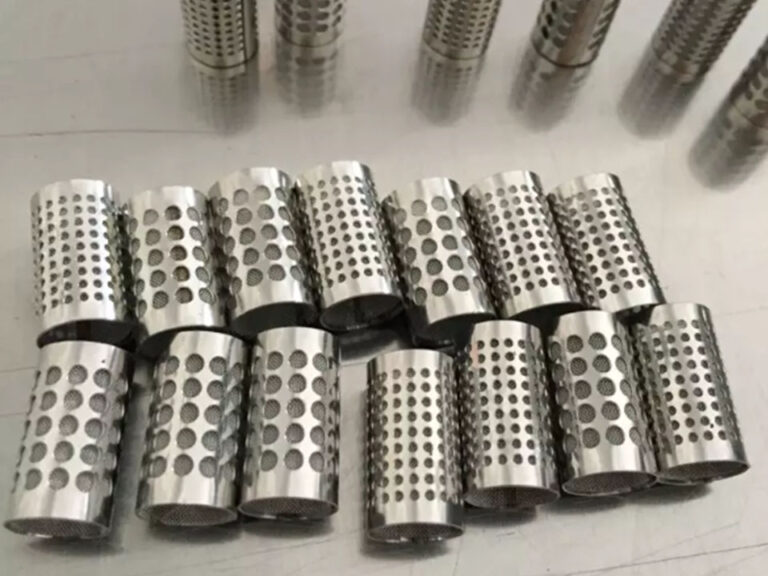
A combination can also make sense. Some systems use a backwashable mesh stage upstream to remove coarse solids, followed by felt for fine polishing. Mesh layers are also used as protective or support layers in composite constructions. CFC Filtration’s sintered metal filter cartridge range lists multilayer sintered mesh, fiber felt, pleated, and perforated-plate composite mesh constructions, so a hybrid option can be discussed during a technical review.
What to Include in an RFQ
A quotation request that gets the right element the first time usually contains:
Fluid or gas, viscosity, and temperature range
Contaminant type, size range, and approximate concentration
Required retention level and how it is verified (nominal, absolute, or beta ratio)
Flow rate and acceptable clean and terminal pressure drop
Operating and maximum differential pressure, including reverse flow or pulses
Cleaning method and expected cleaning frequency
Housing dimensions, end connections, and sealing arrangement
Not by category. Both can be produced across a range of fine ratings, and manufacturers publish different ranges. A 10 µm felt and a 10 µm mesh are rated by different structures and may be tested differently, so compare them on the same test method and, ideally, on your own fluid.
Which one has a lower pressure drop?
Felt often has lower pressure drop at a comparable retention level because it is more porous, and it tends to hold that advantage as dirt loads. The actual result depends on viscosity, thickness, and flow rate, so check flow-versus-differential-pressure data at your conditions.
Which is easier to backwash?
Sintered mesh generally releases solids more readily, because they collect near the surface. Felt can be cleaned too, but recovery is often less complete.
Does a tighter micron rating mean everything larger is removed?
No. A micron rating describes the media’s retention behavior under a defined test. Elongated or deformable particles, bypass paths, and sealing problems can all let larger contaminants through, so confirm the rating basis and the cartridge sealing.
Can I use both in the same filtration system?
Yes. A mesh stage can protect and extend the life of a downstream felt element, or both can appear within one composite construction. Discuss the layout with your filter supplier based on particle size distribution and cleaning method.
Conclusion
Choose fiber felt when high dirt-holding capacity, fine particle capture, and low pressure drop under heavy loading matter most. Choose sintered mesh when a defined cut point, rigidity, and reliable backwash or CIP cleaning matter more. Most selection errors come from comparing micron ratings without comparing the test basis, cleaning plan, and pressure conditions behind them.
Send your operating conditions, contaminant data, and housing details to CFC Filtration, and our engineers can help you evaluate whether fiber felt, sintered mesh, or a combined construction suits your process.