How Do Porous Plastic Pipette Tip Filters Prevent Aerosol Contamination?

Transparent laboratory pipette tips with assorted white cylindrical porous filter plugs in different diameters for liquid handling applications.

Aerosols formed during pipetting can travel up a tip and contaminate the pipette shaft, a serious risk in PCR and other sensitive workflows. This article explains how porous plastic filters inside pipette tips intercept those aerosols and why pore size alone does not guarantee protection. It also covers the tradeoffs that affect pipetting performance and the specifications buyers and OEM developers should confirm before sourcing filter media.

Read MoreHow Do Porous Plastic Pipette Tip Filters Prevent Aerosol Contamination?

Laboratory Filter Cartridges: Types, Applications, and Selection Guide

Transparent cylindrical Laboratory Filter Cartridges with narrow outlet tubes and matching white porous filter discs in four sizes.

Choosing a laboratory filter cartridge means more than picking a micron number. This guide compares sintered plastic, sintered metal, and membrane-based options. It explains where each fits in sample preparation, venting, gas handling, and pipetting, and shows how pore-size ratings, wetting behavior, chemical compatibility, cleaning, and validation affect the choice. It ends with a practical checklist for specifying a custom cartridge.

Read MoreLaboratory Filter Cartridges: Types, Applications, and Selection Guide

What are the types of filters used in pharma industry?

Medical Filter Cartridges used in transparent pipette tips with white porous filter plugs for contamination control in laboratory sample handling.

Pharmaceutical plants rely on several filter families, and each one does a different job. This guide explains sterilizing-grade membranes, depth filters and prefilters, HEPA and vent filters, ultrafiltration, and sintered porous components. It also covers where each type sits in a process, which specification errors cause trouble, and what buyers should confirm before requesting a quotation.

Read MoreWhat are the types of filters used in pharma industry?

What Are Engineering Plastic Filter Cartridges Used For?

Close-up of a white engineering plastics filter sheet showing its smooth surface, straight edges, and flat rectangular structure.

Engineering plastic filter cartridges are sintered porous elements made from higher-performance polymers. Buyers choose them when standard PE or PP cannot handle the chemistry, temperature, or mechanical demands of the process. This guide covers the main applications, how common polymers compare, which specifications to confirm, and what to send a supplier when requesting a quotation.

Read MoreWhat Are Engineering Plastic Filter Cartridges Used For?

How to Choose the Right Micron Rating for a PE Sintered Filter Cartridge?

Two large white PE sintered plastic filter cartridges, featuring cylindrical bodies with closed-end and hollow-core designs for industrial filtration.

Micron rating is one of the most misunderstood specifications on a PE sintered filter cartridge. This article explains what the number actually represents, why finer is not automatically better, and how particle size, flow rate, pressure drop, fouling, and cleaning shape the right choice. It also shows how to test candidate ratings and what to send a supplier.

Read MoreHow to Choose the Right Micron Rating for a PE Sintered Filter Cartridge?

What Are PE Sintered Filter Cartridges Used for in Industrial Filtration?

Top view of a large round PE sintered plastic filter cartridge with a measuring tape positioned vertically across its circular end face

PE sintered filter cartridges are rigid porous elements used well beyond simple particle removal. This guide explains where they work in water treatment, process liquids, pneumatic protection, venting, and fluid distribution. It also covers how they compare with PP, PTFE, and metal media, which operating limits to confirm, and what information to include in an RFQ.

Read MoreWhat Are PE Sintered Filter Cartridges Used for in Industrial Filtration?

What Is a High Flow Filter?

Full-length High Flow Filter Cartridges with a white cylindrical slotted outer cage and integrated metal pull handle on a blue background.

A high flow filter packs a large amount of pleated media into a large-diameter cartridge so one element can handle the flow that would otherwise need many standard cartridges. This guide explains how the design works, how it differs from conventional cartridges, where it fits best, and which specifications buyers should settle before requesting a quotation.

Read MoreWhat Is a High Flow Filter?

How to Choose a 20-Inch Sediment Filter Cartridge for Water Filtration

Sediment Filter Cartridges showing long and short cylindrical designs, red O-ring seals, and protective plastic packaging.

This guide explains how to specify a 20-inch sediment filter cartridge for water systems. It covers housing fit, nominal versus absolute micron ratings, melt blown, pleated, string wound and sintered constructions, flow and pressure drop, temperature limits, and replacement planning, and it ends with an RFQ checklist that helps engineers and buyers request accurate quotations.

Read MoreHow to Choose a 20-Inch Sediment Filter Cartridge for Water Filtration

How Do Pleated Filters Work?

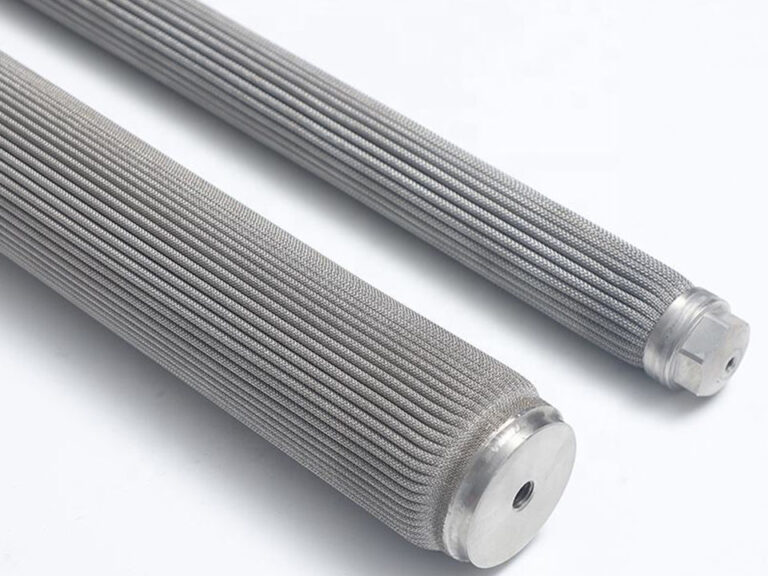
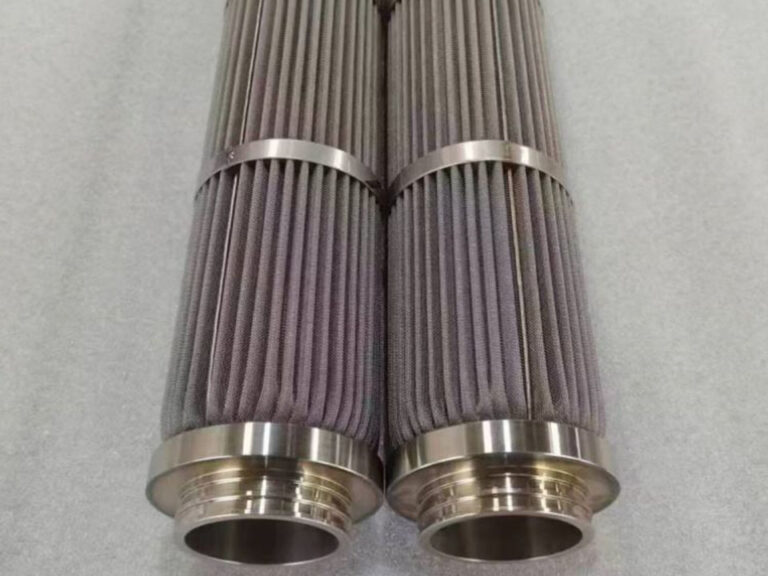
Close-up of sintered pleated filters showing detailed metal mesh pleats, cylindrical construction, and precision-machined end caps.

Pleated filters fold flat media into compact cartridges that offer far more filtration area than a plain tube. This article explains how that added area affects flow velocity, pressure drop, and service life, why more pleats are not always better, how pleated media types differ, and which operating details buyers should define before specifying a pleated sintered metal cartridge.

Read MoreHow Do Pleated Filters Work?