Before you leave, we invite you to talk directly with our managing team to ensure you receive the most accurate technical guidance, pricing support, and customization options for your project. Our experts can quickly evaluate your requirements, recommend suitable sintered plastic filter solutions, and help you reduce sourcing risks while improving efficiency, consistency, and long-term supply stability for your industrial applications.
Need Help Selecting the Right Filter Cartridge?
Our Sales Team
Tell our sales support team your product type, micron rating, size, application, filtered medium, working temperature, pressure, and estimated quantity. We will help you match the right sintered plastic, sintered metal, or sediment filter cartridge.
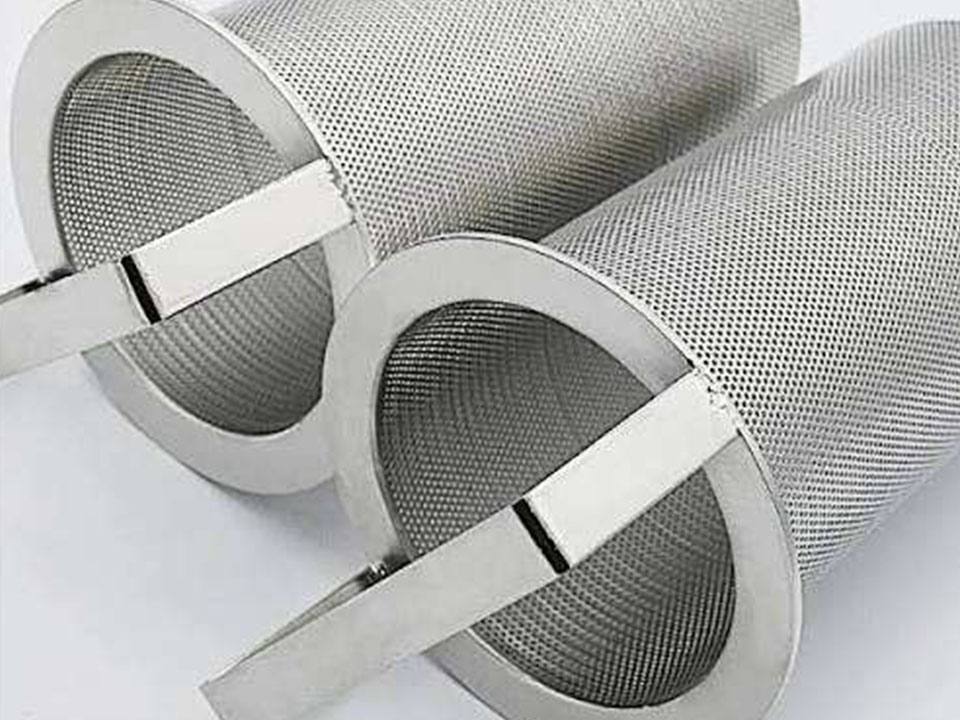
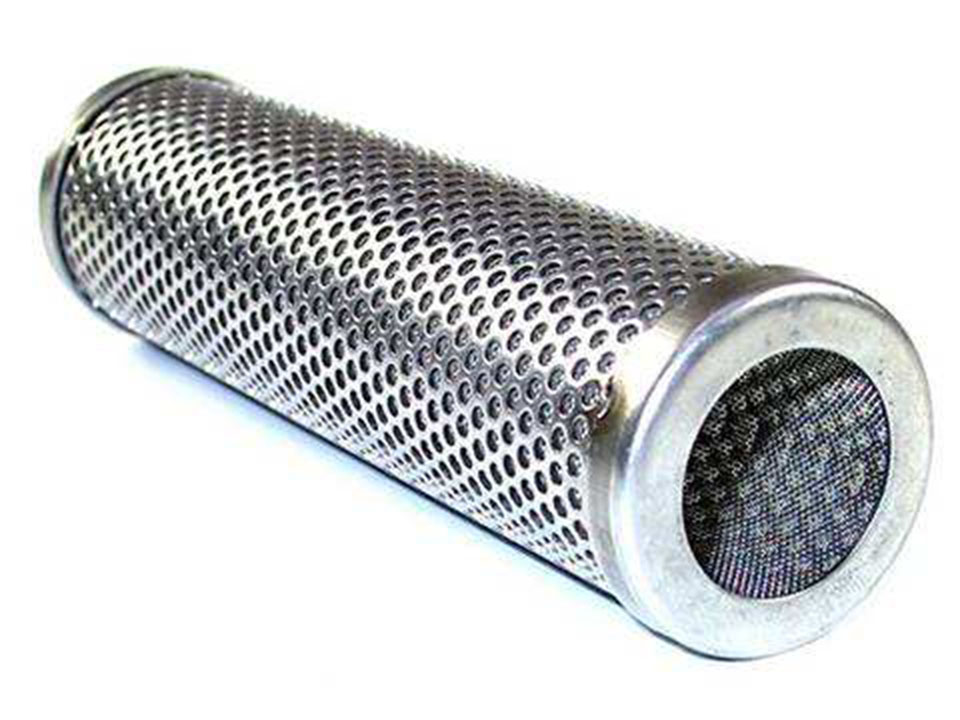
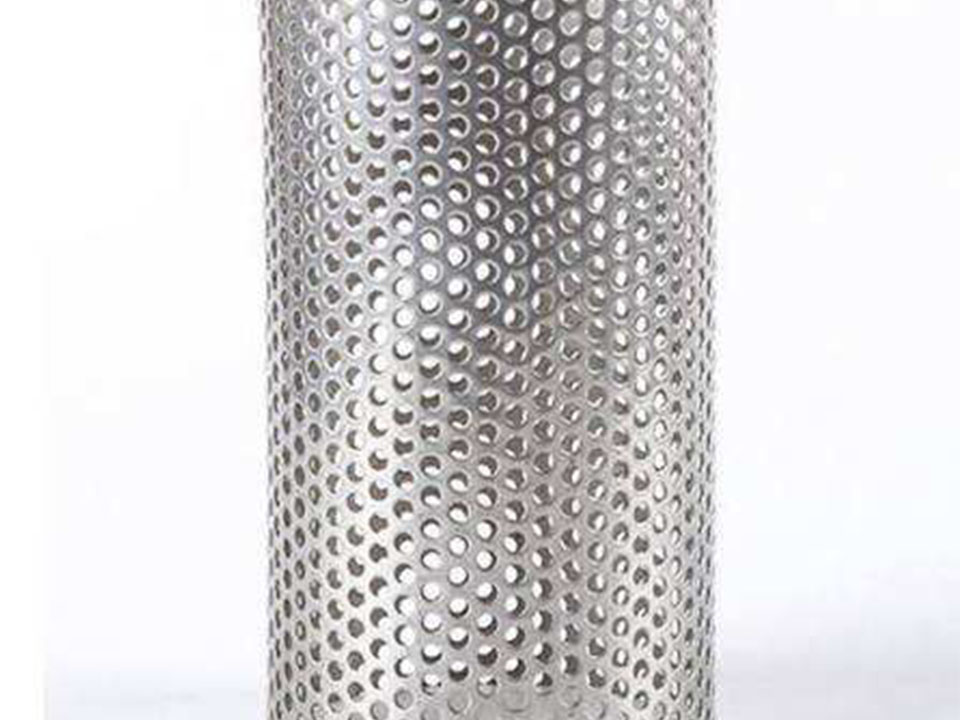
A perforated plate is a metal sheet punched or drilled with a regular pattern of holes. In filtration and fluid handling it does four jobs: it strains out coarse debris, supports finer filter media against pressure, spreads flow evenly, and protects the media from mechanical damage. It is usually not the component that sets fine micron retention. It is the part that keeps the rest of the filter intact and usable under real operating loads.
That distinction matters in procurement. If a drawing calls for a perforated plate and the buyer expects it to behave like a 20-micron filter, the specification is already off track. Understanding what the plate is designed to do, and what hole geometry changes, helps you ask suppliers better questions.
What a Perforated Plate Does in a Filtration System
Coarse straining
The simplest use is direct straining. The Fluid Controls Institute describes a pipeline strainer as a device that mechanically removes solids from a flowing fluid using a perforated metal, mesh, or wedge wire element. Its guide places the most common strainer retention range between 1 inch and 40 microns. Perforated plate sits at the coarser end of that range, where the goal is protecting pumps, meters, spray nozzles, valves, and heat exchangers from scale, rust, and other debris.
In this role the hole diameter is effectively the cut point. A particle larger than the hole is stopped, and a smaller one passes. This is surface straining, not depth filtration, and there is no tortuous path to catch smaller particles.
Supporting finer filter media
Fine filter layers are often thin and mechanically weak. Woven wire mesh with a fine opening may have excellent retention but little stiffness. Under differential pressure it can deform, shift, or tear.
A perforated plate placed on the downstream side gives the fine layer a rigid backing. In some designs, plate is also placed on the upstream side as a protective cage. The plate carries the structural load while the fine layer does the retention work. This is the main reason perforated plate appears in composite metal filter constructions.
Distributing flow and protecting media
Perforated plate also works as a diffuser or baffle. Evenly spaced holes break up concentrated inlet jets and spread flow over a larger area of the media behind them. That can reduce localized loading and erosion on the filter layer.
On the upstream face, the plate also shields the media from impact by larger solids, handling damage, and the stresses of installation or cleaning.
Hole Geometry: What the Pattern Controls
Three parameters determine how a perforated plate behaves: hole size, pitch (the center-to-center spacing), and plate thickness. Together they set open area, strength, and pressure drop.
Open area and pressure drop
Open area is the percentage of the plate that is actually void. For round holes in a 60-degree staggered pattern, a supplier’s technical page on industrial plate screens gives the relationship as roughly 0.9 × (hole size ÷ pitch)². A pitch-to-hole ratio of 2 gives about 23% open area, while a ratio of 1.25 gives about 58%.
Higher open area means lower flow resistance, but less metal to carry load. This is the central tradeoff. A plate that looks excellent on a flow calculation may not hold its shape at the differential pressure the system can reach during fouling, a pump surge, or a blocked outlet.
Why the 60-degree staggered pattern dominates
The Perforated Metals Handbook notes that round holes in a standard 60-degree staggered pattern make up more than half of perforating industry production and produce the strongest pattern. It also cautions that reliable strength and stiffness data for perforated materials are limited for design purposes. That caution is a practical reminder: do not assume a perforated plate carries the same load as solid sheet of equal thickness. Collapse pressure for your specific plate and geometry should be confirmed rather than inferred.
Square holes and in-line patterns exist, but they are chosen for specific reasons such as particular open-area targets or tooling and appearance constraints, not as general-purpose defaults.
Thickness, burrs, and edge condition
Thickness affects stiffness, but it also affects hole quality. Thicker plate with small holes is harder to punch cleanly and may be drilled or laser cut instead. Burrs, uneven hole edges, and dimensional variation can matter when the plate sits directly against fine mesh or when you need predictable straining. State your tolerance and edge requirements on the drawing instead of leaving them to supplier defaults.
Perforated Plate vs. Wire Mesh vs. Sintered Media
These three components are often confused. They solve different problems.
Feature
Perforated plate
Woven wire mesh
Sintered metal media
Main role
Straining of coarse solids, structural support, flow distribution
Straining and surface retention at finer openings
Fine retention with a rigid porous structure
Retention mechanism
Hole size, surface straining
Opening size, mostly surface straining
Interconnected pores, surface and depth effects depending on construction
Mechanical rigidity
High relative to its open area
Low to moderate on its own
Generally rigid
Typical weakness
Not suited to fine retention on its own
Can deform under pressure without backing
Pressure drop and cleaning behavior depend on grade and fluid
Common role in a cartridge
Support layer or outer protective layer
Filtration layer or protective layer
Primary filtration layer
Material and construction details vary by manufacturer, so treat this as a general comparison rather than a product specification.
Perforated Plate in Composite Sintered Mesh Cartridges
Sintered mesh filters combine several layers of woven wire mesh bonded by heat and pressure. When the application involves high differential pressure, pulsation, or rough handling, a perforated plate layer can be added to reinforce the assembly. The plate provides stiffness, and the sintered mesh layers set the filtration rating.
If surface area is a bigger constraint than structural strength, a pleated construction may be worth comparing. A stainless steel sintered mesh pleated filter cartridge provides more media area in the same envelope, though the best choice still depends on fluid, contamination load, and cleaning method.
What to Specify Before Requesting a Quote
A perforated plate or perforated composite cartridge can’t be selected from a micron number alone. Gather these details:
Fluid and contaminants: liquid, gas, or steam; viscosity; particle type and size range.
Retention target: the smallest particle that must be controlled, and whether the rating is nominal or absolute.
Flow rate and allowable pressure drop: clean and at end-of-run.
Maximum differential pressure: including upset conditions, not just normal operation.
Temperature and chemical environment: which affects alloy choice. Do not assume a grade is compatible without checking the actual process fluid.
Cleaning method: backflushing, ultrasonic, or chemical cleaning, and flow direction during cleaning.
Geometry and sealing: outer diameter, length, end fittings, and the housing it must fit.
Hole pattern and open area: if you have a required plate design, supply the drawing or sample.
Common Specification Mistakes
Treating the plate as a fine filter. Hole size sets the straining cut point, but larger holes pass larger particles, and plate alone gives no depth filtration.
Maximizing open area without checking strength. Lower pressure drop is attractive until the plate deforms under differential pressure.
Ignoring flow direction. In a composite cartridge, which side faces upstream affects loading, protection, and cleaning. Confirm it with the supplier.
Specifying hole size without tolerance or edge quality. This leaves retention and fit to chance.
Assuming all stainless grades behave the same. Corrosion behavior depends on the chemistry and temperature of the actual process.
FAQ
Is a perforated plate a filter?
It can act as a coarse strainer, but it is not a fine filter. Its retention is limited to the hole size, and it provides little depth capture. In finer filtration it usually serves as structural support or protection for the media.
How does open area affect filter performance?
Greater open area lowers flow resistance but leaves less material to resist pressure. Strength, stiffness, and pressure drop all need to be balanced for the maximum differential pressure the system may see.
Why are the holes often staggered at 60 degrees?
The pattern allows a wide range of open areas and is widely regarded as the strongest common arrangement, which is why it is so common in perforated metal production.
Can a perforated plate be cleaned and reused?
Metal plate is generally cleanable, but results depend on the contaminant, material, and cleaning method. In a composite cartridge, cleaning performance is governed by the entire assembly, so confirm the recommended cleaning method with the manufacturer for your application.
What is the difference between a perforated plate and a sintered mesh filter?
Perforated plate is a single punched sheet used for straining and support. A sintered mesh filter bonds multiple wire mesh layers into a unified porous structure with a defined filtration rating. The two are often combined in one cartridge.
Conclusion
The purpose of a perforated plate is mainly structural and protective: it strains coarse material, backs up finer media, and distributes flow. It does not replace a properly rated filtration layer. The right plate balances hole size, pitch, thickness, and open area against the pressure, temperature, and cleaning demands of the system. Specify those requirements early, and treat the plate as part of the complete filter design.
If you are considering a perforated plate composite mesh cartridge or need help defining a custom metal filter element, send your operating conditions, drawings, or existing cartridge details to CFC Filtration. Our team can review the application and discuss suitable materials and configurations.