Before you leave, we invite you to talk directly with our managing team to ensure you receive the most accurate technical guidance, pricing support, and customization options for your project. Our experts can quickly evaluate your requirements, recommend suitable sintered plastic filter solutions, and help you reduce sourcing risks while improving efficiency, consistency, and long-term supply stability for your industrial applications.
Need Help Selecting the Right Filter Cartridge?
Our Sales Team
Tell our sales support team your product type, micron rating, size, application, filtered medium, working temperature, pressure, and estimated quantity. We will help you match the right sintered plastic, sintered metal, or sediment filter cartridge.
A sintered PE filter is used to remove particles from liquids and gases, but that is only part of the answer. The same rigid porous structure also works as a vent, a gas diffuser, a flow restrictor and a fluid distributor. Many buyers specify these elements for one job and later find they could serve another.
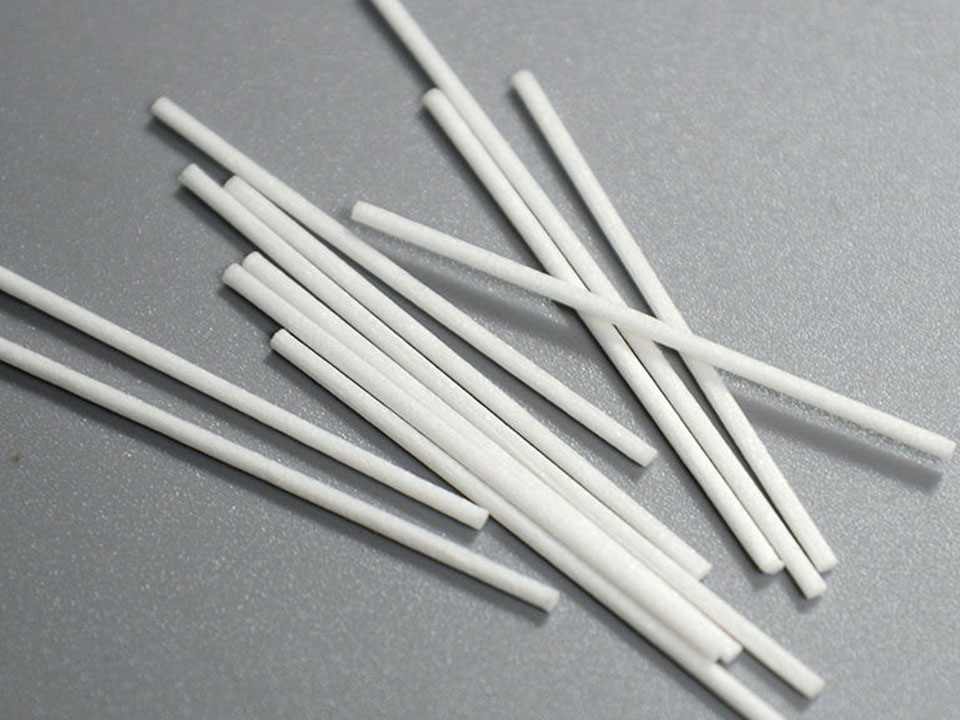
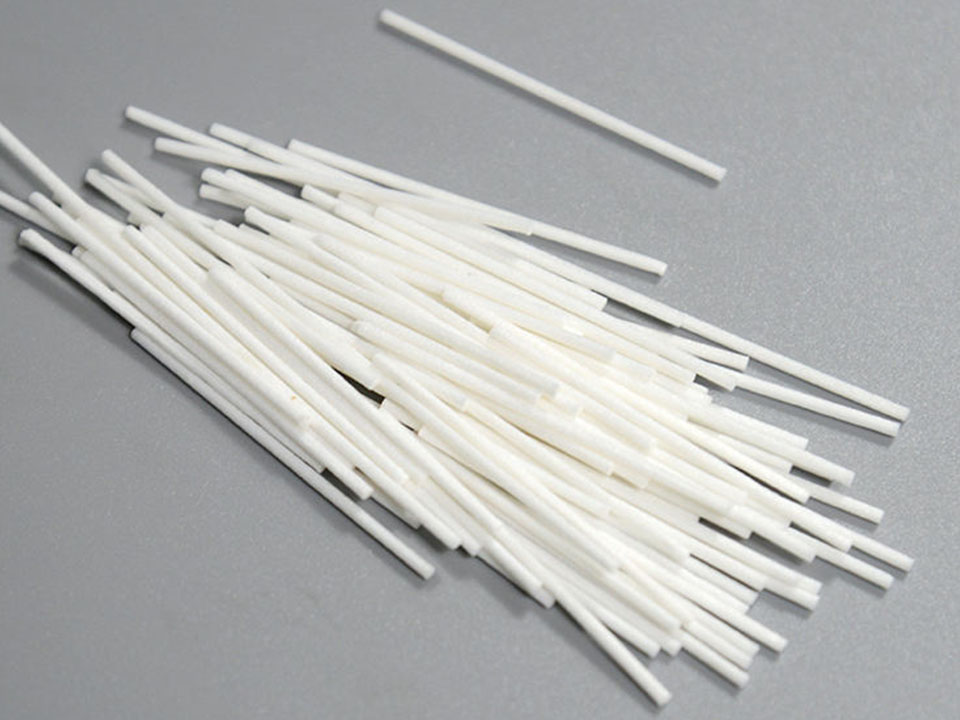
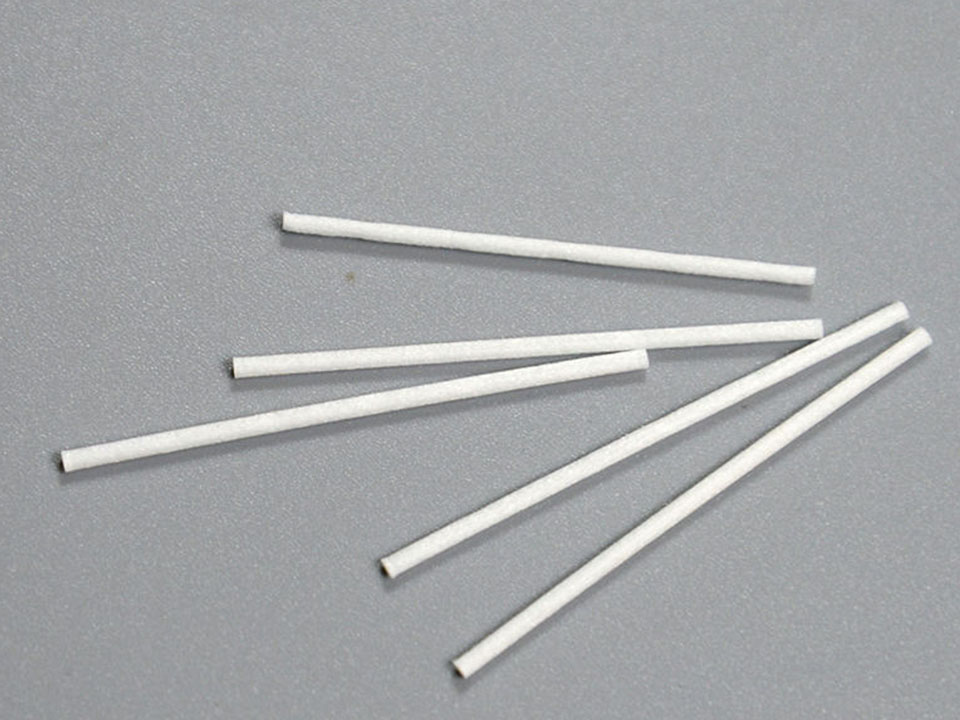
The structure is formed by fusing polyethylene powder just below its melting point, which leaves a network of interconnected pores in a self-supporting body. Because the element holds its shape, it can be molded or machined into tubes, cylinders, discs, cups and sheets. This article covers where that structure is used, what each use demands from the element, and which limits to check before you place an order.
What Makes a Sintered PE Filter Different from Other Filter Media
Most disposable depth media, such as melt-blown or wound cartridges, are built from fibers. A sintered plastic element is a continuous porous solid. CFC Filtration describes its sintered plastic cartridges as rigid porous elements made by compacting and sintering controlled polymer powders, and that rigidity explains most of the uses below.
Shape stability. The element does not collapse or channel as easily under differential pressure, which suits housings and machine assemblies with fixed dimensions.
Particle retention by depth. Particles are captured within the thickness of the porous wall, not only on the surface. Retention depends on pore-size distribution, wall thickness and flow conditions.
Good fit for gas and liquid service. The same base structure can be tuned for airflow, liquid flow or controlled diffusion.
Customizable form. Geometry, end connections and wall thickness can be matched to the equipment instead of the other way around.
Polyethylene itself is lightweight and has broad chemical resistance at moderate temperatures. It is not the right base polymer for every fluid, as covered in the limits section below.
Main Uses of a Sintered PE Filter
Liquid Filtration and Water Treatment
This is the most familiar use. PE elements serve as prefilters, point-of-use filters and protective filters in water treatment, process water loops and general industrial liquid lines. They are common where the goal is to keep particles from reaching pumps, valves, spray nozzles, membranes or instrumentation.
Two points deserve attention in liquid service:
Retention is not the same as removal of everything below the rating. A stated micron grade describes the pore structure, and the actual retention efficiency depends on the test method and operating conditions. If a downstream component has a hard particle limit, ask how the rating was determined.
Particle filters do not remove dissolved contaminants. A PE element controls suspended solids. Dissolved ions, chemicals and microorganisms are separate treatment problems.
Pneumatic and Gas-Side Protection
Porous PE is widely used to protect compressed-air and gas components. Typical positions include:
Inline protection for pneumatic cylinders, valves and instrumentation
Gas inlets on analytical or process equipment
Silencing or flow-smoothing elements on exhaust ports
CFC Filtration lists pneumatic protection and venting among the typical uses of its PE sintered filter cartridges. Gas service is generally less forgiving of oversized pores, because a small leak path matters more at high velocity. It is also less tolerant of pressure drop that was never calculated.
Venting and Breathing
A vent has to let air move while keeping dirt, spray or liquid out. Porous plastics are widely used for this in tanks, containers, housings and gearboxes. Porous plastic suppliers such as CMI Filtration describe use as breathers, frits, diffusers, wicks and restrictors, alongside hydrophobic and hydrophilic surface options.
Hydrophobicity matters here. Untreated polyethylene tends to resist wetting by water, which helps a vent keep liquid out, but it can cause trouble when you want water to pass through a filter. This is a common specification gap, and it is worth discussing with your supplier.
Gas Diffusion and Sparging
When gas needs to enter a liquid as many small streams, a porous PE tube or disc can act as a diffuser. The pore network spreads the gas over the element surface instead of releasing it from a single orifice. Pore size, wall thickness and gas pressure together influence bubble size and distribution, and these should be set to the process and not copied from a generic part.
Fluid Distribution and Flow Control
Porous elements can equalize flow across a surface, act as a restrictor, or hold a controlled liquid path. Here, the key properties are permeability and uniformity, not just the micron grade. If your design uses the element to meter or distribute flow, ask for permeability data under conditions close to your own.
Where Sintered PE Fits and Where It Doesn’t
Use
What the element must do
What to confirm before ordering
Liquid prefiltration
Protect downstream equipment from particles
Micron grade and how it is defined, flow rate, allowable pressure drop
Pneumatic protection
Stop particles without choking airflow
Gas flow, working pressure, end connection and sealing
Venting
Pass air while resisting liquid or dust
Hydrophobic or hydrophilic behavior, liquid exposure, mounting style
Gas diffusion
Create fine, uniform bubbles
Pore size, wall thickness, gas pressure
Flow distribution
Provide uniform resistance
Permeability, dimensional tolerance, orientation
PE is a practical choice in many of these roles, but it is not universal. Compare it with PP, PTFE, nylon and sintered metal in the context of your fluid and temperature. PTFE is typically assessed for aggressive chemicals or hydrophobic gas service. Sintered metal is generally considered when temperatures, pressures or cleaning methods exceed what plastic should handle. Foam media may suit applications that need a more open, compressible element, such as CFC’s industrial foam filter cartridge for air and liquid filtration. Choose the material for the duty, not for familiarity.
Limits to Check Before Specifying a PE Filter
Temperature and Pressure
Plastic elements have lower temperature and pressure margins than metal ones. The actual limits depend on the polyethylene grade, the sintering process, the wall thickness and the geometry, as well as the service conditions. Rely on a limit confirmed for the exact element, not on a general figure for polyethylene.
Chemical Compatibility
Polyethylene resists many acids, bases and salts, but strong oxidizers and some hydrocarbon or aromatic solvents, especially at elevated temperature, can cause problems. Compatibility should be reviewed against the actual process fluid, concentration and temperature. Cleaning chemicals and sterilization agents need to be included, since they often attack elements that process fluid does not.
Wettability
As noted above, untreated PE may need pre-wetting or surface treatment before it passes aqueous liquids at a reasonable pressure drop. If the element will also be used for venting, confirm the hydrophobic behavior you are paying for.
Cleaning and Reuse
Some PE elements can be backflushed or cleaned, but reusability is not the same for every grade and design. Deeply embedded fine particles, oils and biological films can be hard to remove from a depth structure. Decide whether you expect a cleanable element or a replaceable one before choosing the pore size.
Regulated Applications
For food, beverage, medical or pharmaceutical use, do not assume that a standard PE element is acceptable. Ask for material documentation that fits your regulatory requirement, and have your quality team review it.
How to Prepare an Accurate RFQ
A supplier can make a better recommendation when it receives operating data instead of just a micron number. Provide:
Fluid or gas, including concentration and any cleaning agents
Operating temperature range and peak conditions
Working pressure and expected differential pressure
Required flow rate and acceptable pressure drop
Target particle size and what failure looks like downstream
Required geometry, dimensions, end connections and sealing method
Cleaning or replacement expectations
Regulatory or documentation requirements
Drawings or a sample, if replacing an existing part
It is used for liquid and gas filtration, pneumatic component protection, venting, gas diffusion and fluid distribution. The rigid porous structure suits applications that need a fixed shape, stable flow and custom geometry.
Is a sintered PE filter good for water filtration?
It can serve as a prefilter or protective filter for suspended solids in many water systems. It does not remove dissolved contaminants, and untreated PE may resist wetting, so confirm wettability and the particle target first.
Can a sintered PE filter be cleaned and reused?
Sometimes. Backflushing or cleaning may work depending on the fouling type and the element design, but results vary. Oils, fine particles and biological material can be difficult to remove, so confirm the cleaning method with your supplier.
What is the difference between sintered PE and sintered PP?
Both are porous plastics, but they differ in chemical resistance, temperature behavior and mechanical properties. The better choice depends on your fluid, temperature and pressure, and neither is better in every case.
Does the micron rating guarantee that all larger particles are removed?
No. A micron rating describes pore size or tested retention under defined conditions, and the pore-size distribution and flow conditions affect real performance. If you need a firm cutoff, ask how the rating was measured.
Choosing a Sintered PE Filter
The use of a sintered PE filter is defined by what the porous structure has to do: filter, vent, diffuse or distribute. Polyethylene suits many of these jobs when temperature, chemistry and wetting behavior are within its limits. When one of them is not, a different material is the better engineering decision, and it is cheaper to find that out before purchase than after.
If you are evaluating a PE element for a new design or a replacement part, send your operating conditions, drawings and target performance to CFC Filtration. The team can review whether a PE configuration fits your application or whether another sintered plastic or metal option is a better match.