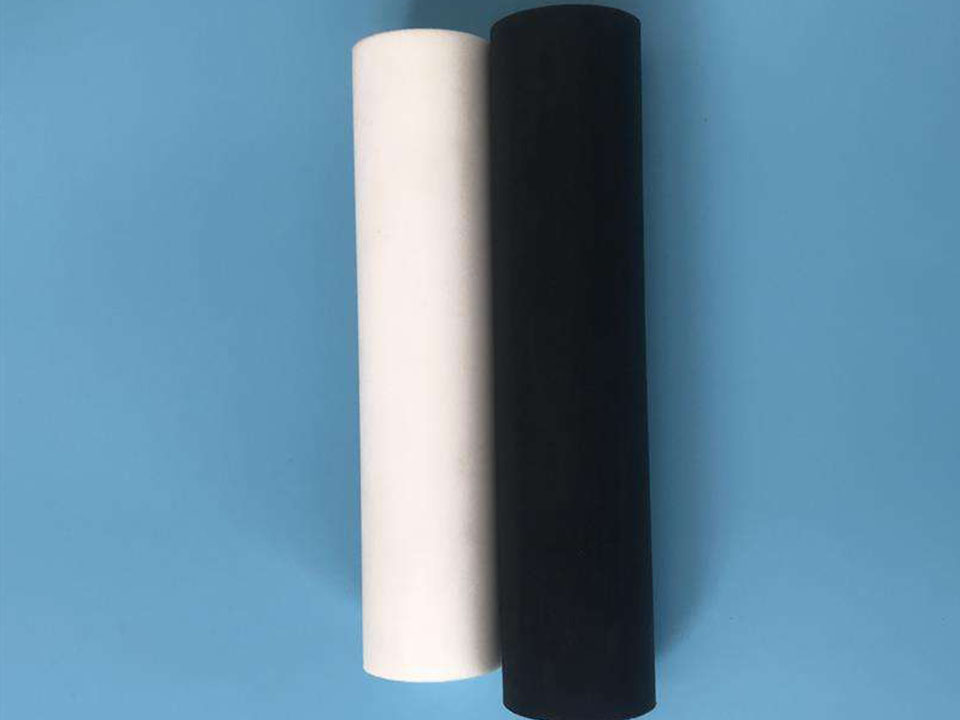
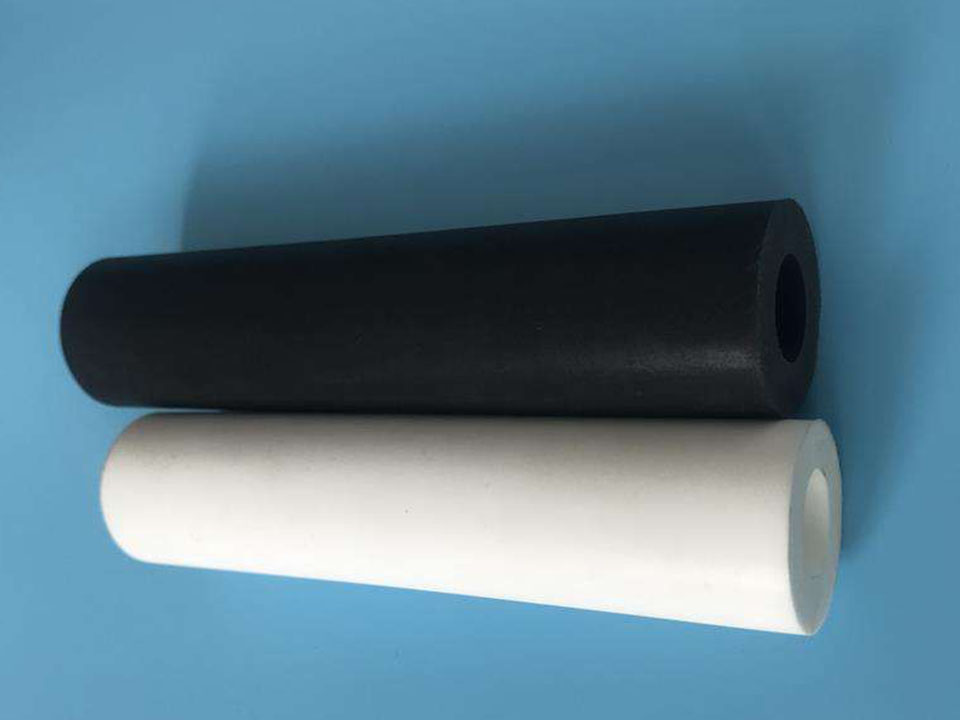
Before you leave, we invite you to talk directly with our managing team to ensure you receive the most accurate technical guidance, pricing support, and customization options for your project. Our experts can quickly evaluate your requirements, recommend suitable sintered plastic filter solutions, and help you reduce sourcing risks while improving efficiency, consistency, and long-term supply stability for your industrial applications.
Need Help Selecting the Right Filter Cartridge?
Our Sales Team
Tell our sales support team your product type, micron rating, size, application, filtered medium, working temperature, pressure, and estimated quantity. We will help you match the right sintered plastic, sintered metal, or sediment filter cartridge.
Choosing a sintered plastic filter cartridge for industrial service comes down to a sequence of decisions: the operating window (temperature, pressure, chemistry), the pore structure, the material, the cartridge geometry and sealing, and the cleaning or replacement plan. Working in that order avoids the most common mistake, which is picking a micron rating first and discovering later that the material, fit, or pressure limit does not work.
CFC Filtration’s application overview states that industrial filter cartridges can be designed for process water, chemicals, compressed air, machinery, manufacturing fluids, environmental systems, and production equipment. It also states that each application needs a separate review of media compatibility, cartridge geometry, performance targets, and validation requirements. This guide follows the same logic and adds the engineering detail buyers tend to miss.
Step 1: Define the Operating Window
Temperature is usually the first criterion that rules out a material, and cleaning chemistry often stresses an element more than the process fluid does. A filter-materials guide recommends defining the medium, concentration, continuous and peak temperature, and cleaning agents before selecting a polymer, then checking seals and construction materials, then validating with test samples where data is inconclusive.
Write down these items before you talk to a supplier:
Fluid or gas, with composition and concentration
Continuous and peak temperature, including cleaning and any steam or hot flush events
Working pressure and maximum differential pressure
Required flow rate and acceptable pressure drop
Solids type, size, and loading
Step 2: Choose the Pore Structure
Pore size controls filtration precision, flow rate, and differential pressure. According to PolyStar’s porous plastics design guide, smaller pores raise precision but reduce flow, and larger pores raise flow capacity but reduce retention. The guide gives typical average pore sizes of 3 to 350+ microns and achievable porosity of 30 to 70 percent for that manufacturer. It recommends starting from the required efficiency or flow rate and working backward.
Three practical points:
Pore size is a distribution. Sintered structures contain a range of pore sizes, so a nominal rating does not mean every larger particle is removed. Ask how the rating was determined and what retention efficiency applies.
Loading drives life. As solids accumulate, pressure drop rises. Pick a pore size that retains the particles you need to stop without loading faster than your maintenance schedule allows.
Ranges vary by polymer and supplier. One porous-plastics manufacturer lists pore sizes of 5 to 250 microns for polyethylene and 100 to 300 microns for polypropylene, in its sintered porous plastic data. Treat these as one supplier’s figures.
Step 3: Match the Material to the Fluid
CFC Filtration lists PE, PP, PTFE, nylon, and engineering-plastic sintered filters on its product pages. Use the table as a starting point, not a specification.
Material
Typical reasons to consider
Watch-outs
PE
Aqueous and mildly chemical duty at moderate temperature
Lower temperature ceiling; limited with many solvents and oxidizers
PP
Similar chemistry to PE with a higher temperature ceiling in published data
Oxidizers; confirm limits for your grade
PTFE
Aggressive chemistry, high temperature, hydrophobic venting
Wetting with aqueous fluids; cost
Nylon (PA)
Alkalis and some solvents
Poor with strong acids and oxidizers; moisture effects
PVDF, PEEK, other engineering plastics
Higher temperature or chemical demands
Cost; availability in your pore size and shape
For temperature, one manufacturer lists operating temperatures of 180°F for its PE, 250°F for its PP, and 400°F for its PTFE. Another may differ, so request the limit for the exact element at your pressure and in your fluid. Compatibility tables show tendencies, not guarantees, and concentration, temperature, and exposure time can change a rating.
Step 4: Check Geometry, Fit, and Sealing
A cartridge that filters well but does not fit the housing fails on day one. Confirm:
Outside diameter, inside diameter, and length
End connections and sealing method
Whether the cartridge is single-open-ended or double-open-ended
Flow direction, since pressure ratings can depend on it
Pressure ratings also depend on size. One manufacturer’s cartridge data sheet lists different forward pressure ratings for different cartridge diameters, and states that flow rates may be limited by the core or the housing, not just the media. Always ask for the pressure rating that applies to your exact dimensions and flow direction.
The medium is rarely the first part to fail. The same materials guide notes that the least resistant component, including end caps, bonding, core, and seals, sets the service life.
Step 5: Plan Cleaning and Replacement
Decide how the cartridge will be maintained before you finalize the material.
Backflushing or chemical cleaning may work for surface-loaded solids. The cleaning agent must suit the polymer.
Deep-loaded fine particles, oils, or polymers may not come out. Replacement may be the practical option.
Differential pressure is a useful trigger for service, so install pressure gauges where you can.
Compare lifecycle cost, not only element price. Consider cleaning labor, downtime, and replacement frequency. Do not assume all sintered filters have the same cleaning capability or reusability.
When Sintered Plastic Is Not the Right Choice
Dissolved contaminants. A sintered plastic cartridge is a mechanical particle barrier. If the problem is dissolved organics, taste, or odor, a different media is needed. CFC also lists an activated carbon pleated filter cartridge for process water. It serves a different function, and its specifications should be confirmed with the supplier.
Very fine retention. If your process needs a tighter rating than sintered plastic offers, a membrane or pleated cartridge may be more appropriate.
High surface area at low pressure drop. Pleated constructions provide more area in the same cartridge size. Compare them if flow capacity is the limit.
Common Specification Mistakes
Choosing by micron rating alone, before confirming chemistry, temperature, and pressure
Ignoring peak conditions, such as CIP temperatures, steam excursions, or pressure surges
Checking the polymer but not the assembly
Assuming PTFE or an engineering plastic is automatically better
Not verifying pressure ratings for your cartridge size and flow direction
Treating general chemical tables as guarantees
What to Send With Your RFQ
Fluid or gas, with composition, concentration, and pH
Continuous and peak temperature, including cleaning cycles
Working pressure and maximum differential pressure
Flow rate and acceptable pressure drop
Particle type and size, and the retention target with its test basis
Cleaning method and agents
Housing drawing, dimensions, end connections, and seal type
Flow direction
Regulatory or documentation requirements
Estimated annual quantity and replacement frequency
What pore size should I choose for an industrial cartridge?
Start from the particles you must retain and the flow you need, and work backward. Smaller pores increase retention and pressure drop, and larger pores do the opposite. Ask how the supplier’s rating is defined.
Which material is best for sintered plastic cartridges?
There is no universal best. PE and PP suit many aqueous and mildly chemical services, PTFE is considered for aggressive chemistry and high temperature, and nylon suits a narrower set of fluids. Confirm against your actual fluid.
Can sintered plastic cartridges be cleaned and reused?
Sometimes. It depends on the material, the contaminant, and the cleaning agent. Deep-loaded fine particles may not come out, so confirm the method with the supplier.
How do I know when to replace a cartridge?
Rising differential pressure is the usual trigger, along with downstream quality. Set a limit during commissioning and monitor it.
Do sintered plastic cartridges remove dissolved contaminants?
No. They are mechanical particle filters. Dissolved contaminants need other treatment, and any removal claim needs test data for the specific product.
Conclusion
Select industrial sintered plastic cartridges in sequence: operating window, pore structure, material, fit and pressure rating, then cleaning. Verify the assembly, not just the medium, and confirm limits for your exact element. If another filter type fits better, say so early.
If you are specifying a cartridge for process water, chemicals, compressed air, or OEM equipment, share your fluid, temperature, pressure, flow, and housing dimensions with CFC Filtration. The team can discuss suitable materials, pore ratings, and custom configurations for your system.