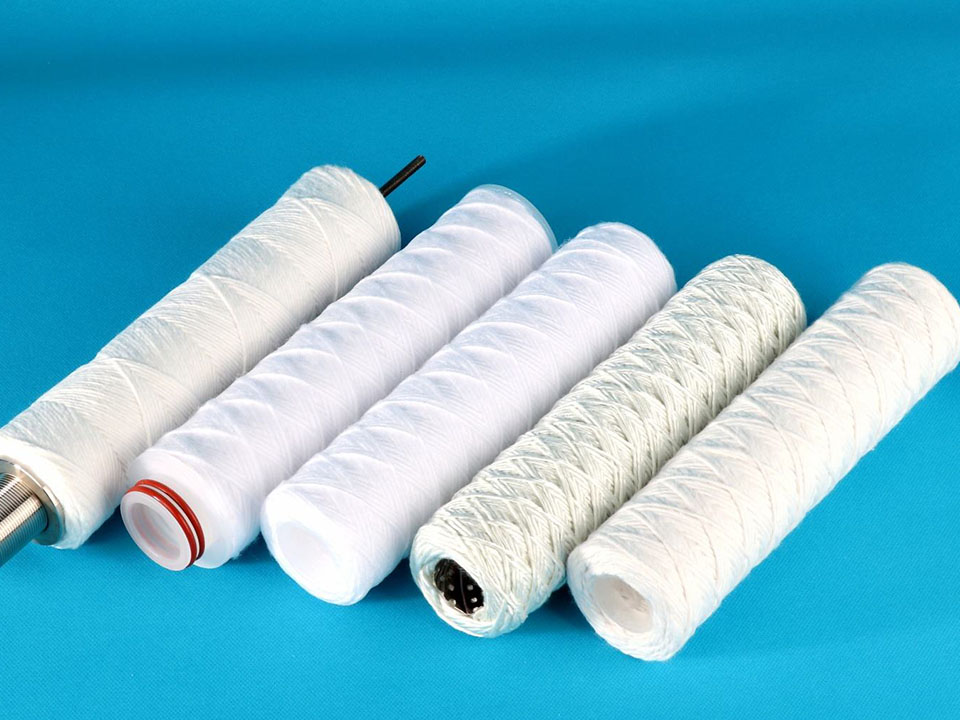
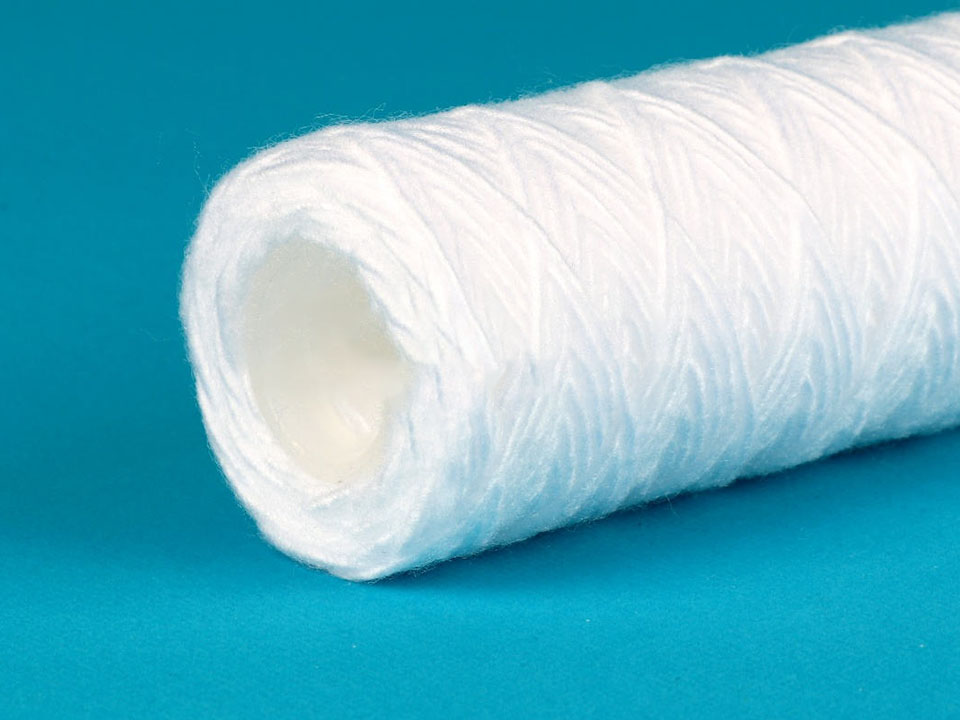
Before you leave, we invite you to talk directly with our managing team to ensure you receive the most accurate technical guidance, pricing support, and customization options for your project. Our experts can quickly evaluate your requirements, recommend suitable sintered plastic filter solutions, and help you reduce sourcing risks while improving efficiency, consistency, and long-term supply stability for your industrial applications.
Need Help Selecting the Right Filter Cartridge?
Our Sales Team
Tell our sales support team your product type, micron rating, size, application, filtered medium, working temperature, pressure, and estimated quantity. We will help you match the right sintered plastic, sintered metal, or sediment filter cartridge.
Melt Blown vs. Pleated Sediment Filter Cartridges: Which Should You Choose?
Choose melt blown cartridges when the fluid carries a wide range of particle sizes, the solids load is moderate to heavy, and you need low cost per cartridge. Choose pleated cartridges when you need a tighter, more predictable cutoff, a higher flow rate in a compact housing, or longer life on cleaner fluids. Many systems use both: a melt blown element upstream to take the bulk load, and a pleated element downstream to polish.
That rule of thumb breaks down quickly in real plants. The construction type does not decide the outcome on its own. Particle size distribution, particle type, fluid viscosity, allowable differential pressure, and how you define “efficiency” all matter. This guide explains how each design captures particles, where each tends to struggle, and what to confirm before you specify one.
How the Two Cartridge Designs Capture Particles
Melt blown cartridges: depth filtration
Melt blown cartridges are made by extruding polymer fibers onto a core and building up a fibrous matrix. The fibers are usually laid down in a graded-density structure. The outer layers are more open and the inner layers are tighter. Large particles lodge near the surface, and progressively finer particles are caught deeper in the wall.
This is depth filtration. The cartridge wall holds contaminant throughout its thickness rather than on one face. Pall’s melt blown technical brochure describes the same principle: a graded pore structure with high void volume intended to give high dirt-holding capacity and low flow resistance. Polypropylene is the most common melt blown material for water and general process liquids. Always confirm the actual material, temperature limit, and chemical compatibility with the cartridge supplier for your fluid.
Pleated cartridges: more media area in the same envelope
A pleated cartridge folds a flat media sheet into pleats around a core. That puts much more media area into the same cartridge length and diameter. For a given flow, the fluid velocity through the media is lower, so initial pressure drop is usually lower and the cartridge can run longer before reaching its change-out limit, provided the solids load suits the design.
Pleated media is usually thinner and more uniform than a thick fibrous wall. That is why pleated cartridges are often chosen when a more consistent cutoff is required. The tradeoff is that a thin medium has less internal volume to store solids. Heavy loading of large or compressible particles can blind the pleat surface and push differential pressure up sharply.
One nuance is worth stating: the two categories are not mutually exclusive. Some pleated cartridges are made from melt blown media, and some manufacturers offer both depth and pleated formats built on similar polymers. When comparing quotes, ask about the media structure, not only the format name.
Side-by-Side Comparison
The table is qualitative. Actual performance depends on the specific media, rating, and manufacturer, so verify against datasheets and test data.
Factor
Melt blown (depth)
Pleated
Primary capture mode
Throughout wall thickness
Mainly at or near the media surface
Typical strength
Handles wide particle size ranges and heavier solids loads
Higher media area, sharper cutoff, compact footprint
Typical weakness
Less defined cutoff, especially at nominal ratings
Can blind quickly if large or heavy solids reach the media
Initial pressure drop
Often moderate
Often lower at equal flow
Dirt-holding behavior
Gradual rise in differential pressure
Can stay flat, then rise quickly near end of life
Cost per cartridge
Generally lower
Generally higher
Common role
Prefilter, general clarification
Final or polishing filter, tighter control
Micron Rating: Where Most Specification Errors Start
A micron rating on a cartridge label is only meaningful if you know how it was defined.
Nominal rating: The cartridge removes a stated percentage of particles at or above that size. The percentage is manufacturer-defined and the test method varies. Particles larger than the rating can still pass.
Absolute rating: Marketed as a hard cutoff, but only meaningful if backed by a defined test method and efficiency threshold, such as a beta ratio from a recognized multi-pass test.
Pore size vs. retention: Pore size and retention efficiency are different measurements. A cartridge with a given nominal pore size does not guarantee removal of every larger particle.
Melt blown cartridges are often sold with nominal ratings. Pleated cartridges are more commonly offered with higher-efficiency or absolute-type ratings, though not always. Two cartridges that both say “5 micron” can behave very differently. If downstream equipment is sensitive, such as membranes, spray nozzles, or precision valves, request the efficiency basis in writing, along with the test method and conditions.
Another point is easy to overlook. Pressure spikes, pulsating flow, and repeated start-stop cycles can cause fiber shedding or captured-particle unloading from some depth media, especially at high differential pressure. If the system has frequent surges, factor that into your selection and consider a downstream safeguard.
How Particle Load Should Drive the Decision
Heavy or variable sediment
Rust flakes, sand, scale, and mixed silt generate a broad particle size distribution. Depth media tends to handle this better because the graded structure spreads the load across the wall. A pleated cartridge installed directly on such a stream may need frequent replacement.
Light load with tight control
When the fluid is already relatively clean and the goal is consistent particle control, pleated cartridges often provide longer service life and a more predictable cutoff. This is typical for final protection upstream of sensitive equipment.
Gels, deformable solids, and high viscosity
Soft or gelatinous contaminants can deform and squeeze through depth media, or smear across pleat surfaces. High viscosity raises pressure drop for both designs. These cases are often best settled with a sample trial rather than by catalog comparison.
Flow Rate, Footprint, and Housing Considerations
Pleated designs generally offer more usable media area per housing, which can reduce the number of cartridges or the housing size required for a given flow. For large water systems, though, a third option exists: high flow cartridges. These use a larger diameter and an enlarged media area to carry more flow per element. CFC Filtration describes its high flow filter cartridges for industrial water systems as aimed at systems that need greater throughput with fewer cartridges and a smaller housing footprint. Those who are replacing or designing around this format can also review high flow filter cartridges for industrial water use. Always check that the housing, sealing arrangement, and end connection match the cartridge, because physical fit is as important as the filtration media.
Lifecycle Cost: Compare Cost per Change-Out Interval
A lower unit price does not mean a lower operating cost. A more meaningful comparison considers:
Price per cartridge
How long each cartridge runs before reaching your differential pressure limit
Labor and downtime for each change-out
Disposal cost
Risk to downstream equipment if a cartridge fails to hold its rating
In a heavily loaded stream, a lower-cost melt blown cartridge may deliver the lowest cost per volume filtered. In a clean stream, a pleated cartridge may last long enough to outweigh its higher price. Do not assume either result without field data or a trial. Staged filtration often wins: a coarser depth cartridge protects a finer, more expensive pleated cartridge so the latter lasts longer.
Common Selection Mistakes
Choosing by micron number alone. Without knowing the efficiency basis, the number says little.
Placing a pleated cartridge on an unprotected, dirty line. Early blinding is a common result.
Ignoring end-of-life differential pressure. Set a change-out limit based on the housing, pump, and cartridge design, not on habit.
Overlooking chemical and temperature compatibility. General polymer properties do not replace checking the actual process fluid and conditions.
Skipping the sealing and dimension check. Length, outer diameter, core, gasket type, and end cap style must match the housing.
What to Prepare Before Requesting a Quote
Gathering this information upfront shortens the evaluation:
Fluid type, viscosity, and any chemicals present
Operating temperature range and maximum system pressure
Design flow rate and acceptable pressure drop
Particle type, size range, and estimated concentration
Required rating and efficiency basis
Housing model, cartridge dimensions, and end connection
Existing cartridge samples or drawings, if replacing a part
CFC Filtration’s sediment filter cartridge range covers melt blown, high flow, pleated, sintered, and PP formats, and the company states that it evaluates operating data, drawings, or samples for selection. You can also browse the sediment filter cartridge product category to compare available formats.
Frequently Asked Questions
Is a pleated filter always more efficient than a melt blown filter?
No. Efficiency depends on the media, the rating basis, and the test method. Pleated cartridges are often specified with tighter, more defined cutoffs, but a well-designed melt blown cartridge may outperform a poorly specified pleated one. Compare rated efficiency data, not format names.
Which lasts longer?
It depends on the fluid. On heavily loaded fluids with mixed particle sizes, a depth cartridge often lasts longer because it stores solids throughout its wall. On cleaner fluids, a pleated cartridge’s larger media area can extend life. A trial under actual conditions is the most reliable way to know.
Can I use melt blown and pleated cartridges together?
Yes, and it is a common approach. A melt blown cartridge upstream removes most of the solids load, and a pleated cartridge downstream provides tighter control. This can extend the life of the more expensive final element.
Are melt blown or pleated cartridges cleanable?
Typically, both are treated as disposable. Cleaning is generally not practical for fibrous depth media or pleated media in sediment service, and reuse should not be assumed. If you need a cleanable element, ask about sintered cartridge options instead.
How do I choose the micron rating?
Start from what the downstream equipment can tolerate, then confirm how the supplier defines the rating. If protection of a membrane, nozzle, or instrument is critical, ask for the efficiency or beta ratio at the stated size rather than relying on a nominal value.
Conclusion
Melt blown cartridges suit heavier, more variable solids and cost-sensitive prefiltration. Pleated cartridges suit tighter control, compact footprints, and cleaner fluids. The best choice comes from your particle load, the definition of your required micron rating, your pressure-drop limit, and your real cost per change-out. When requirements overlap, a staged arrangement of both designs is often the most practical solution.
If you are specifying a new cartridge or replacing an existing one, send your fluid data, operating conditions, and housing details to CFC Filtration. The team can review them with you and discuss suitable cartridge types, ratings, and custom configurations.